5 GST Mistakes Indian Freelancers Keep Making in 2026 (And How to Fix Them)

Introduction
GST can be confusing for freelancers, especially when you are handling clients, payments, invoices, and tax work on your own. A small mistake in registration, invoicing, or return filing can create problems later.
Many freelancers search for GST mistakes Indian freelancers 2026 because they are not sure when GST applies to their work or how they should handle it correctly.
The good thing is that most GST mistakes are avoidable. You just need to understand the basic rules and keep your records properly.
In this guide, we will look at 5 common GST mistakes Indian freelancers make in 2026 and explain how you can avoid them. We will cover GST registration, invoices, GST rates, return filing, and services provided to clients outside India.
Mistake 1: Not Knowing When GST Registration Is Required
One of the most common GST mistakes Indian freelancers make in 2026 is not checking whether they actually need GST registration.
If you work as a freelancer, GST does not automatically apply just because you earn money from clients. Whether you need registration depends on factors such as your total turnover, the type of service you provide, and where your clients are located.
For many service providers, the general GST registration threshold is ₹20 lakh in annual turnover. In some special category states, the threshold can be lower. There can also be situations where registration is required even when your turnover is below the normal threshold.
For example, suppose you are a freelance web developer and your annual turnover is ₹12 lakh. You may not need GST registration simply because you are providing a service. However, you should still check whether any special rule applies to your particular situation.
How to avoid this mistake
Before deciding whether you need GST registration, check:
Your total annual turnover
The type of freelance services you provide
Your clients' locations
Whether you provide services to clients outside India
Whether any compulsory registration rule applies to you
Do not register for GST simply because another freelancer has GST registration. At the same time, do not ignore registration if the rules require you to register.
If you are close to the applicable turnover limit or your work involves clients outside India, it is better to check the current GST rules carefully before making a decision.
Mistake 2: Making Errors on GST Invoices
Another common GST mistake Indian freelancers make in 2026 is creating invoices with missing or incorrect information.
A GST invoice is not just a bill asking your client for payment. If you are registered under GST, your invoice needs to contain certain details. A small error can make it difficult to match the invoice with your GST records or may create problems for a client who wants to claim Input Tax Credit.
For example, a freelancer may correctly calculate the GST amount but forget to mention the client's GSTIN, use an incorrect invoice number, or charge CGST and SGST when IGST should apply.
What should a GST invoice include?
Depending on the transaction, a GST invoice generally includes details such as:
Your business name and GSTIN
Client's name and address
Client's GSTIN, if applicable
A unique invoice number
Invoice date
Description of the service
SAC code, where applicable
Taxable amount
Applicable GST rate
CGST and SGST or IGST amount
Total amount payable
Place of supply, where applicable
How to avoid this mistake
Create one proper invoice format and use it consistently for your freelance work. Before sending an invoice, check the client's details, invoice number, taxable amount, GST rate, and tax calculation.
Also, keep copies of your invoices and related payment records. This makes it easier to check your accounts when you prepare your GST returns.
If you use an online invoice generator, don't assume that every setting is automatically correct. Check the GST details and tax type before sending the final invoice to your client.
Mistake 3: Charging the Wrong GST
Another mistake freelancers can make is charging the wrong type of GST on an invoice.
For a registered freelancer, the tax you charge can depend on the location of the supplier and the place of supply. This is why you should not simply copy the GST calculation from your previous invoice.
For example, when a service transaction is treated as an intra-state supply, CGST and SGST generally apply. When it is an inter-state supply, IGST generally applies.
A simple example
Suppose you are a GST-registered freelancer in Gujarat and provide a service to a client in Maharashtra.
If the transaction is treated as an inter-state supply, you would generally charge IGST rather than adding CGST and SGST separately.
The situation can be different when the client is in the same state, depending on the applicable place-of-supply rules.
How to avoid this mistake
Before preparing your invoice, check:
Your registered business location
Your client's location
Whether the client is registered under GST
The applicable place-of-supply rule
Whether the transaction is intra-state or inter-state
Make GST Invoicing Easier
Create professional GST invoices, calculate taxes correctly, and keep your freelance billing simple with an easy online invoice generator.
Whether any special rule applies to the service
Do not decide the GST type only by looking at where your client sends the payment from. The GST treatment depends on the applicable supply and place-of-supply rules.
This becomes even more important when you work with foreign clients, because services supplied to customers outside India can be subject to separate rules for export of services.
Mistake 4: Missing GST Return Filing and Payment Deadlines
Many freelancers focus on sending invoices and receiving payments but forget about the GST return filing that comes afterward.
If you are registered under GST, you may have to file GST returns even when your business activity is low or there are no transactions for a particular period. The exact return and filing frequency depend on your GST registration and the scheme you are using.
Two returns that many regular taxpayers deal with are GSTR-1 and GSTR-3B. GSTR-1 contains details of outward supplies, while GSTR-3B is used to declare tax liability and pay the applicable tax.
Missing a deadline can result in late fees and, where applicable, interest on unpaid tax.
Why freelancers miss deadlines
This often happens because freelancers do not have a separate person handling their accounts. You may finish a client project, send the invoice, receive the payment, and then forget that the GST-related work still needs to be completed.
How to avoid this mistake
Keep a simple monthly GST routine:
Record every invoice you issue.
Keep track of GST collected from clients.
Save eligible purchase invoices for business expenses.
Check your GST portal regularly.
Note your applicable return filing deadlines.
File the required returns on time.
Keep proof of payments and filed returns.
Do not wait until the last day to prepare everything. Keeping your invoices and expenses updated throughout the month makes GST filing much easier.
If you are unsure which returns you need to file or which deadlines apply to your registration, check the current GST portal requirements or get help from a tax professional.
Mistake 5: Not Understanding GST on Freelance Services to Foreign Clients
Working with clients from the US, UK, Australia, or other countries is common for Indian freelancers. But receiving money from a foreign client does not automatically mean that every such transaction is treated in the same way under GST.
If your service meets the conditions for export of services, it can be treated as a zero-rated supply under GST. This is different from simply saying that you did not charge GST.
For example, an Indian freelance developer provides software development services to a company in the USA. If the transaction satisfies the conditions for export of services, the freelancer may be able to provide the service under a Letter of Undertaking (LUT) without payment of IGST, subject to the applicable rules.
What freelancers should check
Before treating a foreign-client payment as an export of service, check important conditions such as:
You are located in India.
Your client is located outside India.
The place of supply is outside India as applicable under the GST rules.
You and your client are not merely establishments of the same person.
Payment is received in permitted foreign exchange or as otherwise allowed under the applicable rules.
You should also keep proper records such as invoices, agreements, payment records, and documents showing the nature of the service.
How to avoid this mistake
Do not assume that “foreign client = no GST.” First check whether the transaction actually qualifies as an export of service.
If you regularly work with overseas clients, understand the LUT and export-related GST requirements before choosing how to invoice them. The rules can be technical, so getting professional tax advice can be useful when your freelance work involves regular international payments.
Bonus Mistake: Claiming GST Input Tax Credit Without Checking the Rules
Input Tax Credit (ITC) can help a GST-registered freelancer reduce the GST they have to pay. But you cannot simply claim GST credit on every purchase you make.
For example, a freelance web developer may buy a laptop, software subscription, internet service, or other items for work. If GST has been charged on an eligible business expense and the required conditions are met, the freelancer may be able to claim the GST as Input Tax Credit.
The important part is to keep proper records and check whether the expense is actually eligible.
Common ITC mistakes freelancers make
Some freelancers:
Claim GST on personal purchases.
Lose the original tax invoice.
Enter incorrect invoice details.
Claim credit without checking the applicable GST conditions.
Mix personal and business expenses without proper records.
For example, if you buy a laptop partly for personal use and partly for your freelance business, you should not automatically assume that the entire GST amount can be claimed.
How to avoid this mistake
Keep separate records for your business expenses and save proper GST invoices. Before claiming ITC, check whether the purchase is related to your business and whether the other conditions for claiming credit are satisfied.
Also, do not claim ITC just because an invoice shows a GST amount. The invoice and the transaction both need to meet the applicable GST requirements.
Keeping your purchase invoices organised throughout the year will make it much easier to review your ITC when filing your GST returns.
GST Mistakes Indian Freelancers Should Avoid: Quick Checklist
If you are a freelancer registered under GST, a simple checklist can help you avoid many common mistakes. You do not need a complicated system. Just make sure you regularly check your invoices, payments, expenses, and GST filings.
For a deeper look, read our guide: GST Invoice Requirements for Indian Freelancers in 2026.
Before sending an invoice
Check your GSTIN and client details.
Use a unique invoice number.
Add the correct service description and SAC code, where applicable.
Check the taxable amount and GST calculation.
Confirm whether CGST + SGST or IGST applies.
Check the place of supply where required.
Every month
Record all invoices issued to clients.
Keep records of payments received.
Save eligible business expense invoices.
Check the GST collected from clients.
Review your Input Tax Credit records.
Check your applicable GST filing deadlines.
For foreign clients
Check whether the service qualifies as an export of services.
Keep your client agreement and invoices.
Keep payment and bank records.
Check whether an LUT is required for your chosen GST treatment.
Keep documents supporting the export transaction.
Before filing your GST return
Compare your invoices with your accounting records.
Check that GST amounts are correct.
Review your eligible ITC.
Look for missing or duplicate invoices.
File the applicable returns before the deadline.
Following this checklist does not replace professional tax advice, but it can help you catch basic errors before they turn into bigger GST problems.
Frequently Asked Questions About GST for Indian Freelancers
Do all freelancers in India need GST registration?
No. GST registration is not automatically required just because you work as a freelancer. Your turnover, type of service, location, and other applicable GST rules determine whether registration is required.
What is the GST registration limit for freelancers?
For many service providers, the general threshold is ₹20 lakh in annual turnover, although the applicable threshold can differ in some states and certain situations have separate rules. Freelancers should check the current GST rules based on their location and type of service.
Do freelancers have to charge GST to foreign clients?
Not necessarily. If your service meets the conditions for export of services, it can be treated as a zero-rated supply under GST. The freelancer still needs to follow the applicable requirements for such transactions.
Can a freelancer claim GST Input Tax Credit?
A GST-registered freelancer may be able to claim Input Tax Credit on eligible business expenses, provided the applicable conditions are satisfied. Personal expenses and other ineligible purchases should not be claimed simply because GST was paid on them.
What happens if a freelancer files a GST return late?
Late filing can result in a late fee and, where applicable, interest on unpaid tax. The amount depends on the return, circumstances, and applicable rules. Filing on time is therefore important for GST-registered freelancers.
Should freelancers hire a CA for GST?
Not every freelancer necessarily needs a CA for routine GST work. However, professional help can be useful if you have high turnover, foreign clients, complicated expenses, multiple types of services, or uncertainty about GST registration and filing requirements.
Conclusion
GST does not have to be difficult for freelancers if you keep your records organised and understand the basic rules that apply to your work.
The most common GST mistakes Indian freelancers make in 2026 include missing registration requirements, creating incorrect invoices, charging the wrong GST, missing return deadlines, and misunderstanding the rules for foreign clients. Claiming Input Tax Credit without checking the requirements can also cause problems.
The easiest way to avoid these mistakes is to keep your invoices, expenses, payments, and GST records updated throughout the year instead of trying to fix everything at the last minute.
If your freelance work involves foreign clients, high turnover, or complicated transactions, it is worth checking the current GST rules or taking advice from a qualified tax professional.
A little care with your GST records can save you from unnecessary corrections, late fees, and tax-related problems later.
Found this helpful?
Share it with a fellow freelancer or business owner.
Keep reading
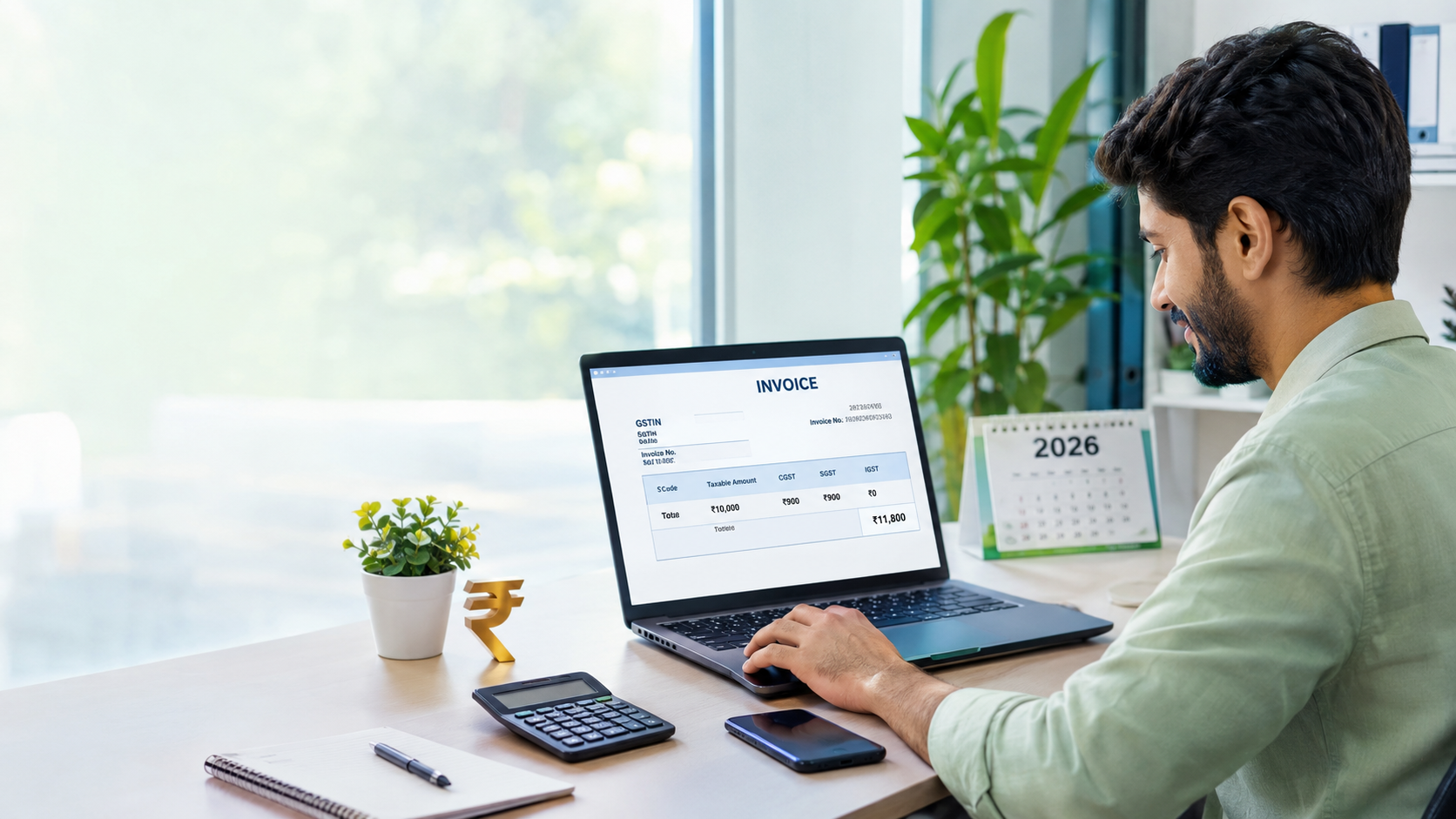
GST Invoice Requirements for Indian Freelancers in 2026: The Complete Checklist
If your annual freelance income in India exceeds ₹20 lakh, GST registration is mandatory. But even below that threshold, corporate clients often demand a GSTIN before processing your invoice. Understanding what a compliant GST invoice must contain helps you avoid rejected payments and stay on the ri
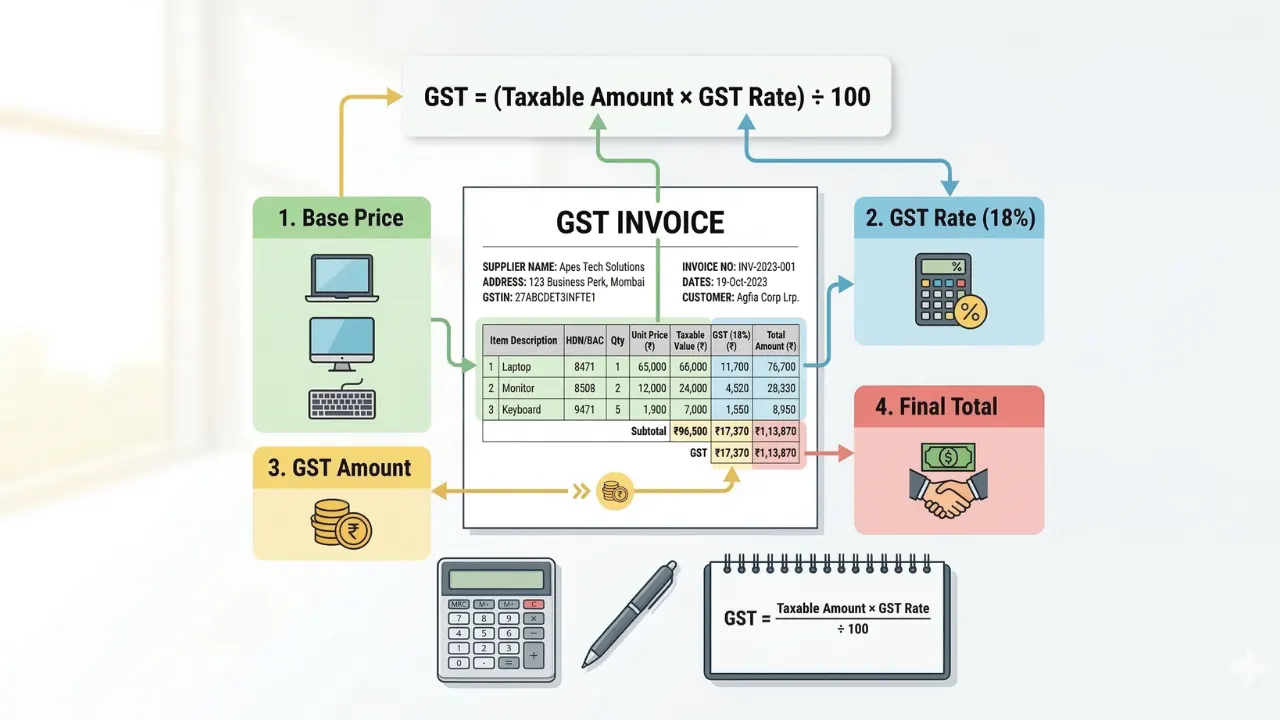
How to Calculate GST in Invoice (With Simple Examples)
Learn how to calculate GST in an invoice with simple formulas and practical examples. This guide explains GST calculation clearly so businesses can create accurate invoices.
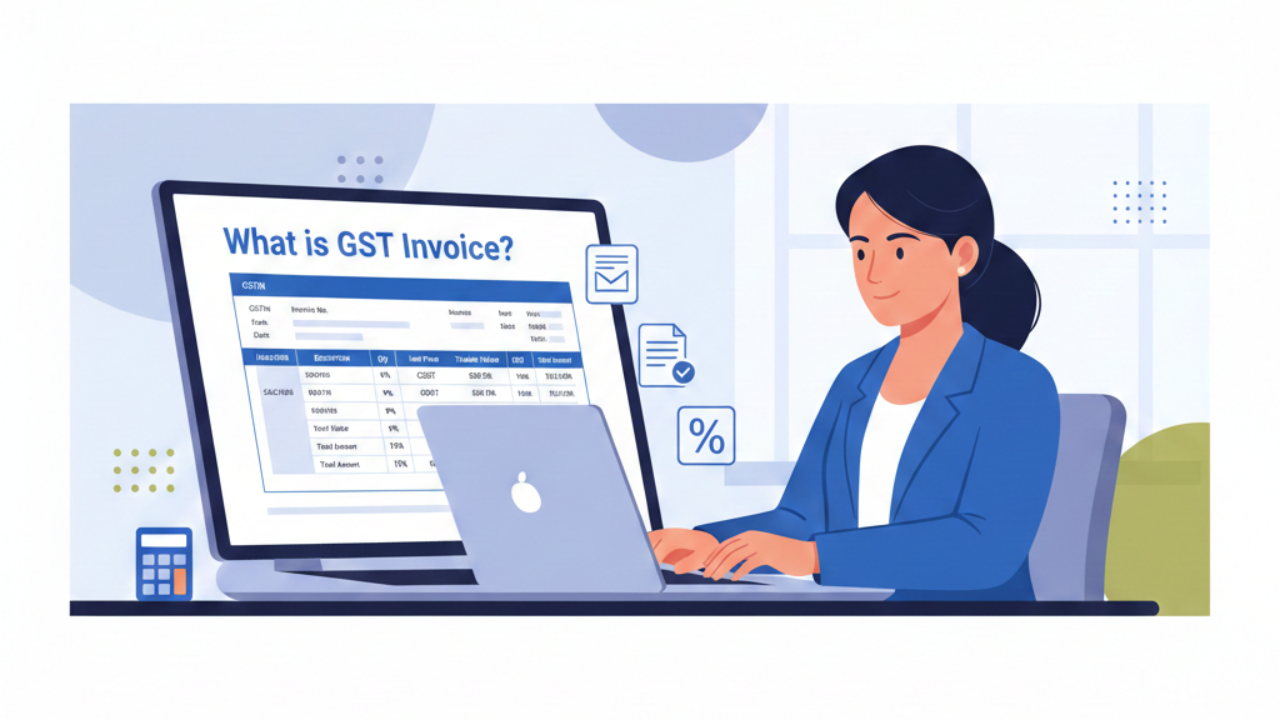
What is GST Invoice? Rules, Format & Mandatory Fields Explained
A GST invoice is a legally required document issued by registered businesses for taxable sales under GST. In this guide, we explain what is GST invoice, its rules, format, and mandatory fields to help your business stay compliant and avoid penalties.
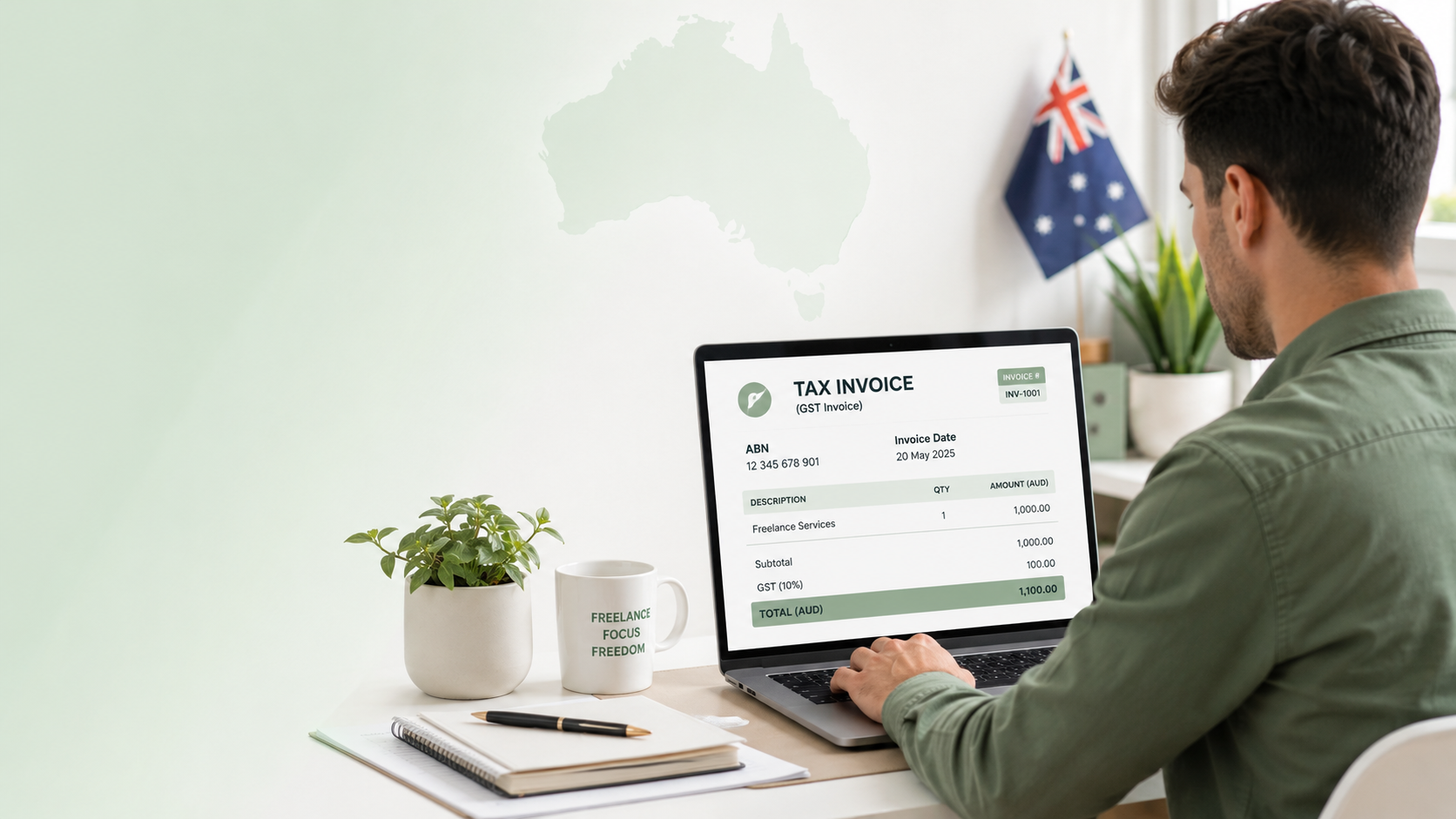
Australia's 7 Mandatory Tax Invoice Fields: The GST Compliance Checklist for Freelancers (2026)
If you are a freelancer operating in Australia, the ATO has strict requirements for what must appear on every tax invoice. Missing even one of the seven mandatory fields means your client cannot claim a GST input tax credit — which can damage professional relationships and trigger compliance questio
How to Create an Invoice in Australia (2026 Guide)
Learn how to create a professional invoice in Australia. Discover invoice requirements, GST, ABN details, payment terms, and use a free invoice generator.
Free Invoice Template in Excel: Download & Create Professional Invoices Easily
A free invoice template in Excel helps you create clean and professional invoices without any design skills. You can easily edit details like client name, services, price, and total amount. It’s simple, fast, and perfect for freelancers and small businesses who want an organized billing process.