Packing Slip vs Invoice vs Delivery Note: What's the Difference?
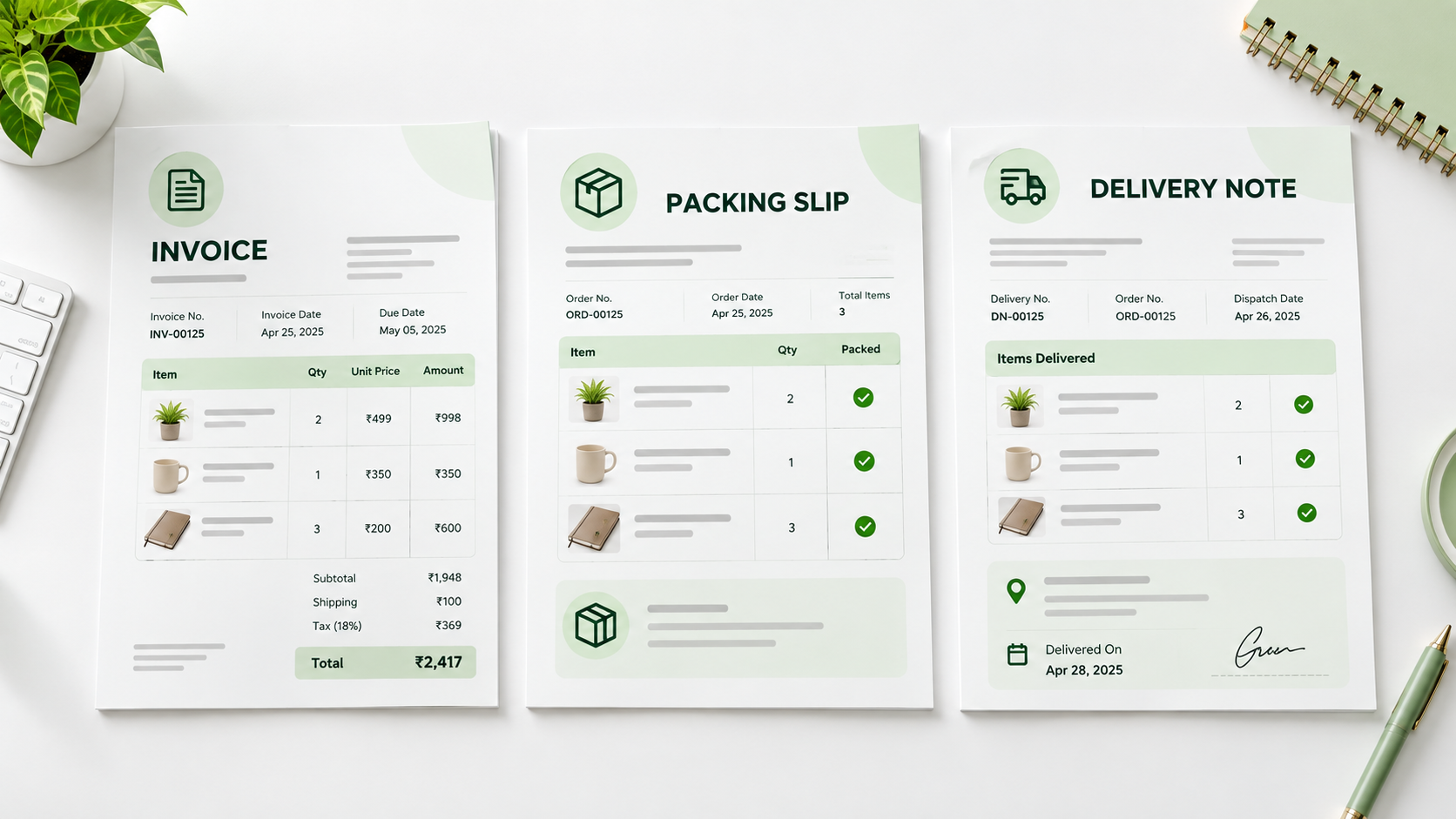
Packing Slip vs Invoice vs Delivery Note: Quick Answer
If you sell products online or send goods to customers, you may come across three common documents: a packing slip, invoice, and delivery note.
They may look similar, but they have different jobs.
The easiest way to remember the difference is:
Invoice: tells the customer how much they need to pay.Packing slip: shows what is inside the package.Delivery note: records what was delivered to the customer.
So, a packing slip vs invoice vs delivery note comparison is really about three different parts of an order: payment, packing, and delivery.
Document: Invoice
Main purpose: Requests payment from the customer
Usually includes prices? Yes
Document : Packing Slip
Main purpose : Shows the products included in the package
Usually includes prices? : Usually no
Document : Delivery Note
Main purpose : Records the goods delivered
Usually includes prices? : Usually no
A simple example
Imagine a customer orders 2 T-shirts and 1 cap from your online store.
The invoice tells the customer the price of the order, any applicable tax, and the total amount to pay.
The packing slip goes with the package and helps the customer or packing team check that the order contains 2 T-shirts and 1 cap.
The delivery note can record that those products were delivered to the customer.
This is the main difference between a packing slip and invoice and a delivery note: an invoice is mainly about payment, while a packing slip and delivery note are mainly about goods and delivery.
You may use one, two, or all three depending on how your business handles orders. For an online store, for example, an invoice can be used for payment records while a packing slip helps with packing and checking the shipment.
What Is an Invoice?
An invoice is a document a business sends to a customer to show what they need to pay for a product or service.
It usually includes the seller's details, customer details, invoice number, date, items or services, prices, taxes, and the total amount due.
For example, if a customer buys three products for $100, the invoice can show:
Product A – $40
Product B – $35
Product C – $25
Total – $100
Ready To Make Packing Slip ?
Generate clean, accurate invoices instantly with our free online invoice generator. No signup required. Fast, simple, and professional.
The main purpose of an invoice is payment. It tells the customer how much they owe and gives both sides a record of the sale.
This is what makes an invoice vs packing slip different. A packing slip is mainly used to show what has been packed, while an invoice shows the financial details of the order.
An invoice is also different from a delivery note. A delivery note can confirm what goods were delivered, but it is not normally used to request payment.
For an online store or small business, you may use an invoice and packing slip for the same order, but they do different jobs.
The invoice handles the money side of the order, while the packing slip handles the package contents.
What Is a Packing Slip?
A packing slip is a document that lists the products included in a package. It is mainly used to help the seller, warehouse team, or customer check that the correct items have been packed and shipped.
If you are wondering what is a packing slip, think of it as a simple checklist for a shipment.
For example, a customer orders:
2 T-shirts1 cap1 pair of socks
The packing slip can list these products and their quantities so the person packing the order can check them before the package is sent.
What Does a Packing Slip Include?
A packing slip commonly includes:
Business name and contact detailsCustomer nameShipping addressOrder numberOrder dateProduct namesProduct quantitiesSKU or product code, if usedProduct size, color, or other variationPackage or shipment details, when needed
A packing slip usually does not need to show product prices. Its main purpose is to show what is inside the package, not how much the customer needs to pay.
Packing Slip for Online Orders
A packing slip for online orders can be especially useful when a business handles many shipments. The person packing the order can use it to check the items before sealing the box.
It can also help the customer quickly check whether all ordered products are included when the package arrives.
This is another key point in the packing slip vs invoice comparison. The invoice focuses on prices, taxes, and payment, while the packing slip focuses on the products being shipped.
Packing Slip vs Delivery Note
A packing slip and delivery note can look similar because both can list products and quantities. The difference is mainly in their purpose.
A packing slip is closely connected to the packing and shipment process. A delivery note is used to record what goods were delivered to the customer.
The exact use of these documents can vary between businesses, but they should not automatically be treated as the same document.
What Is a Delivery Note?
A delivery note is a document that goes with a shipment and records the goods being delivered to a customer. It helps the seller and customer check what was sent and what was received.
If you are wondering what is a delivery note, think of it as a record of the delivery rather than a request for payment.
For example, a business delivers:
5 office chairs5 desks10 desk lamps
The delivery note can list these items and their quantities. The customer can check the shipment against the document when the goods arrive.
What Does a Delivery Note Include?
A delivery note may include:
Business name and contact detailsCustomer name and delivery addressDelivery note numberOrder or reference numberDelivery dateProduct namesQuantities deliveredProduct codes or descriptionsSpace for a signature or delivery confirmation, if needed
Unlike an invoice, a delivery note normally does not focus on prices, tax, or the amount the customer needs to pay.
Why Use a Delivery Note?
A delivery note can make the delivery process easier for both sides. The customer can check the goods received, while the business has a clear record of what was delivered.
It can be useful when an order is delivered in multiple shipments. For example, if a customer orders 10 products but only 6 are delivered today, the delivery note can show the 6 products included in that shipment.
Delivery Note vs Invoice
The main difference between a delivery note and invoice is their purpose.
An invoice is mainly used for payment. It shows prices, taxes when applicable, and the total amount due.
A delivery note is mainly used to record the goods delivered. It helps confirm what was included in the shipment.
So, an invoice answers “How much does the customer need to pay?”, while a delivery note answers “What goods were delivered?”
A business may use both documents for the same order because they serve different purposes.
Packing Slip vs Invoice: What's the Difference?
A packing slip and an invoice can be created for the same order, but they are used for different reasons.
The easiest way to understand the packing slip vs invoice difference is to look at what each document is trying to do.
Packing slip: shows what products are included in the package.Invoice: shows what the customer needs to pay.
What Is the Difference Between a Packing Slip and Invoice?
The biggest difference is the type of information each document focuses on.
A packing slip is useful during packing and delivery. It helps the seller check that the correct products and quantities are going into the package.
An invoice focuses on the financial side of the order. It tells the customer the price of the products or services, applicable taxes, and the total amount due.
For example, suppose a customer orders a pair of shoes for $60 and a T-shirt for $25.
The packing slip may simply show:
Shoes — 1 pair
T-shirt — 1
The invoice may show:
Shoes — $60
T-shirt — $25
Tax — if applicable
Total — $85 plus any applicable tax
This is why a packing slip does not replace an invoice. They may relate to the same order, but they serve different purposes.
Can You Use Both?
Yes. Many businesses can use both a packing slip and an invoice for the same order.
The packing slip helps with the physical shipment, while the invoice handles the payment record.
For an online store, this can make the order process easier because each document has a clear job. The exact documents you need can depend on your business, customers, and local requirements.
Packing Slip vs Delivery Note: What's the Difference?
A packing slip and a delivery note can contain similar information, so it is easy to confuse them. Both may list products and quantities, but they are used at different points in the order and delivery process.
The simple difference is:
Packing slip: helps show and check what has been packed in a shipment.
Delivery note: records what goods have been delivered to the customer.
Packing Slip vs Delivery Note for Online Orders
For an online order, a packing slip is often prepared as part of the packing process. It gives the person handling the order a list of products and quantities to check before the package is shipped.
A delivery note is more focused on the delivery itself. It can show what goods were sent to the customer and may provide a place for delivery confirmation or a signature.
For example, a customer orders 3 products:
1 blue shirt
1 black bag
1 pair of shoes
The packing slip can help the warehouse worker check that all three products are placed in the package.
The delivery note can then record the goods that were delivered to the customer.
Do You Need Both?
Not every business needs to use both documents. The choice depends on how the business manages packing, shipping, and delivery.
A small online seller may use a packing slip to check each order, while a business making regular deliveries to other businesses may use delivery notes to keep a record of goods delivered.
The important point is that a packing slip vs delivery note comparison is not about which document is better. They simply serve different parts of the order process.
Neither document should normally be treated as a replacement for an invoice when the customer needs a document showing the amount owed.
Invoice vs Delivery Note: What's the Difference?
An invoice and a delivery note can both relate to the same customer order, but they have different purposes.
The simple difference is:
Invoice: shows the customer what they need to pay.
Delivery note: records what goods were delivered.
This makes the invoice vs delivery note difference mainly about payment versus delivery.
What Is the Difference Between Invoice and Delivery Note?
An invoice is a financial document. It tells the customer how much they owe for the products or services they purchased. It may include item prices, taxes, discounts, payment terms, and the total amount due.
A delivery note is focused on the physical goods. It can list the products and quantities that were delivered so the customer can check the shipment.
For example, a customer buys 10 notebooks for $50.
The invoice could show:
10 notebooks — $50Applicable taxTotal amount duePayment information
The delivery note could show:
10 notebooksQuantity delivered: 10Delivery dateCustomer and delivery details
The delivery note does not normally tell the customer how much they owe.
Can a Delivery Note Be Used as an Invoice?
A delivery note should not automatically be treated as an invoice.
Even when both documents contain the product names and quantities, their purposes are different. A delivery note records the goods delivered, while an invoice provides the financial details needed for payment.
This is why businesses may create an invoice and delivery note for the same order.
When Do You Use Each Document?
An invoice is useful when you need to request or record payment from a customer.
A delivery note is useful when you need to record the goods being delivered and allow the customer to check the shipment.
For some businesses, both documents are part of the normal order process. The exact documents required can depend on the type of sale and local business or tax rules.
Do You Need a Packing Slip, Invoice, or Delivery Note?
You may not need all three documents for every order. The right choice depends on what you sell, how you deliver products, and how you manage your business records.
A simple way to decide is to look at the job each document does:
Invoice: use it when you need to show the amount the customer owes.
Packing slip: use it to list and check the items going inside a package.
Delivery note: use it to record the goods delivered to a customer.
Do I Need a Packing Slip and Invoice?
You may use both if you sell physical products.
For example, an online store can create an invoice for the customer's payment records and a packing slip for the shipment. The invoice can show prices and taxes, while the packing slip can list the products and quantities.
They can be created for the same order without being the same document.
Do I Need a Delivery Note With an Invoice?
Not always.
If your business delivers physical goods, a delivery note can be useful for recording what was delivered. An invoice can then handle the payment side of the transaction.
For example:
Order: 20 office notebooks
Invoice: Shows the price, applicable tax, and total amount due.
Delivery note: Shows that 20 notebooks were delivered.
The exact documents you should use can depend on your business process and any rules that apply to your type of sale.
What About Online Orders?
For packing slip vs invoice vs delivery note decisions, an online seller might use:
Small order with simple shipping:
InvoicePacking slip, if useful for checking the package
Business delivery:
InvoiceDelivery notePacking slip, if the business also needs a separate packing checklist
There is no need to create extra documents just because all three exist. Each one should have a clear purpose in your order process.
A Simple Rule to Remember
If the document answers “How much does the customer owe?”, it is an invoice.
If it answers “What is inside this package?”, it is a packing slip.
If it answers “What goods were delivered?”, it is a delivery note.
Keeping these three purposes separate makes it easier to choose the right document for each order.
How to Create an Invoice and Packing Slip With Invoice Desire?
If you sell products online, you may need both an invoice and a packing slip for the same order. Using separate tools for each document can make the process more time-consuming.
With Invoice Desire, you can create invoices online and also use its free Packing Slip Generator for your shipments.
Create an Invoice
You can use the Invoice Desire invoice generator to prepare an invoice for your customer.
Add the required business and customer details, enter the products or services, add prices and applicable tax details, and create the invoice. You can then download the invoice as a PDF and share it with your customer.
The invoice is useful for the payment side of the order because it shows the products, prices, taxes when applicable, and total amount due.
Create a Packing Slip
For the physical shipment, you can use the Packing Slip Generator on Invoice Desire.
A packing slip can list the customer's order details, products, and quantities without focusing on prices. This gives you a simple document to use while preparing the package or checking its contents.
For example, if an order contains:
2 T-shirts
1 pair of shoes
1 cap
The packing slip can help you check that all three products are included before the package is shipped.
Invoice + Packing Slip for One Order
You can use the two tools for different parts of the same order:
Step 1: Create the invoice for the payment details.
Step 2: Create the packing slip for the shipment contents.
Step 3: Check the products against the packing slip before sending the package.
Step 4: Send or provide the invoice according to your normal customer process.
This keeps the payment document and shipping document separate while still connecting them to the same order.
Why Use Invoice Desire?
Invoice Desire is useful when you want a simple browser-based way to create these documents without setting up a complicated invoicing system.
You can use its invoice generator for invoices and its free Packing Slip Generator when you need a packing document for your orders.
If you also need other order documents, Invoice Desire provides additional free tools, including a Receipt Maker, Barcode Generator, and Packing Slip Generator.
The main idea is simple: use the invoice for the money side of the order and the packing slip for the package contents.
Conclusion
Understanding the packing slip vs invoice vs delivery note difference makes it easier to choose the right document for each order.
An invoice is mainly for payment. It shows what the customer bought, the prices, applicable taxes, and the total amount due.
A packing slip is mainly for the package. It lists the products and quantities so the order can be checked before shipping and when the customer receives it.
A delivery note is mainly for recording the goods delivered to the customer. It can help both sides confirm what was included in the delivery.
You may not need all three documents for every order. Choose the documents that fit your business process and the type of products you sell.
If you need to create invoices and packing slips, Invoice Desire provides browser-based tools for both. You can create an invoice for the payment details and use the free Packing Slip Generator to prepare the shipment document.
Keeping each document focused on its main purpose can make your order and delivery process much easier to manage.
Found this helpful?
Share it with a fellow freelancer or business owner.
Keep reading

10 Reasons Clients Don't Pay Invoices (And How to Fix Them)
Why Your Client Is Not Paying Your Invoice | 10 Real Reasons
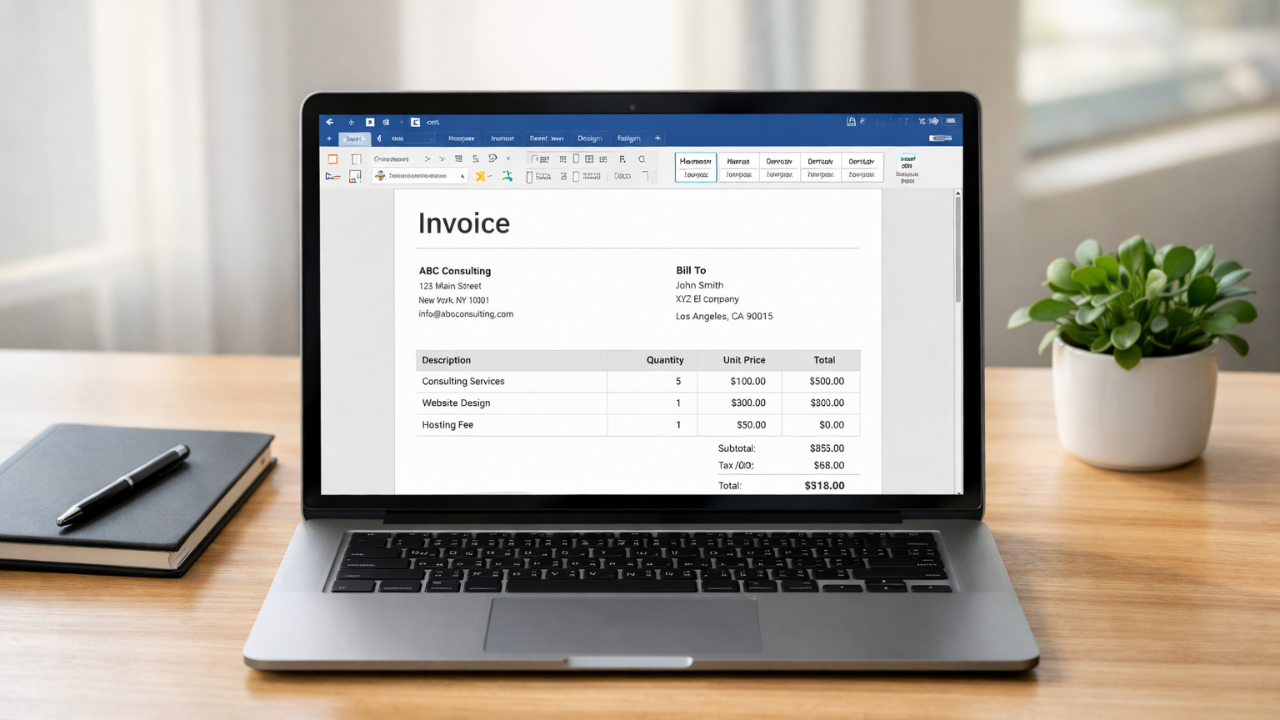
Simple Invoice Format in Word (Free Template for Small Businesses)
Learn how to create a simple invoice format in Word with easy examples, essential invoice elements, and step-by-step guidance.
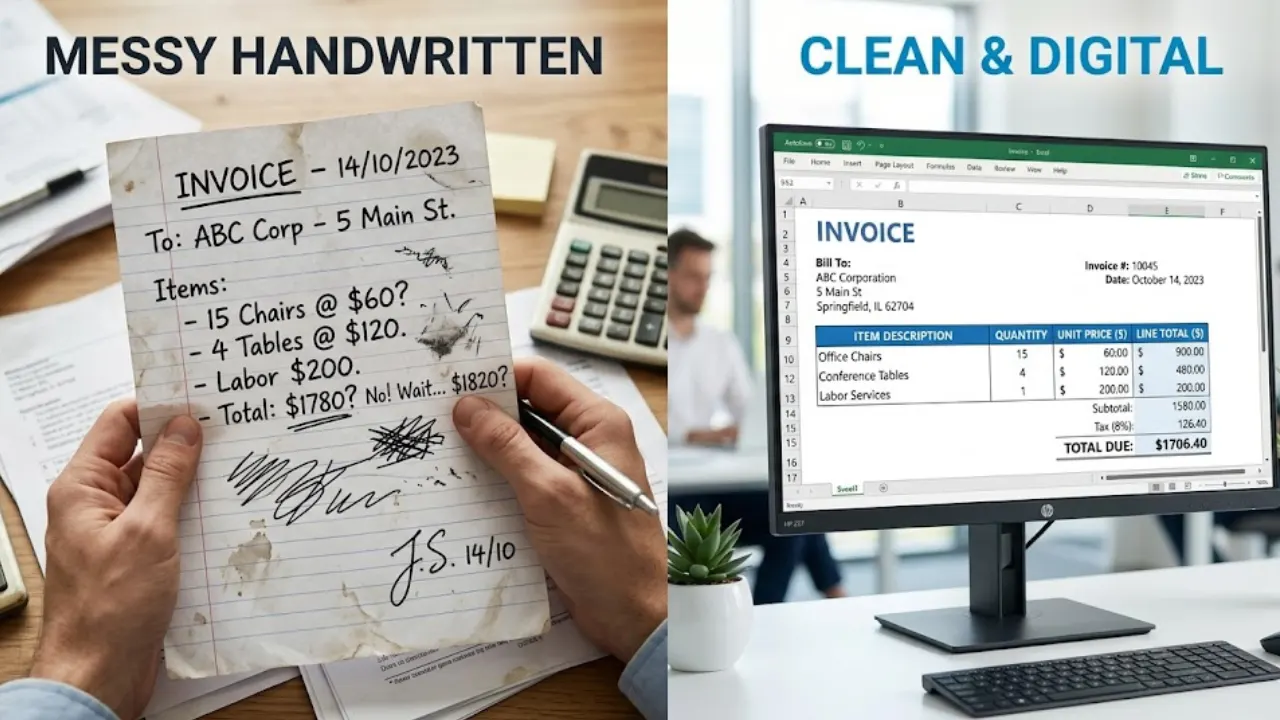
Creating Invoice in Excel Step by Step (With Formula + Free Template)
Creating invoices in Excel is one of the easiest ways to manage billing for freelancers and businesses. In this guide, you’ll learn step-by-step how to design a clean invoice and use formulas to automate calculations like totals, taxes, and discounts.

How to Make an Invoice for Instagram Marketing Services (Easy Guide)
Learn how to make an invoice for Instagram marketing services. Discover what to include, see examples, and create professional invoices for social media clients easily.

7 Essential Elements Every Professional Invoice Must Have
Don't let a missing detail delay your payment. Ensure your invoices are professional, legal, and ready for fast processing.

Can ChatGPT Create Invoices? Pros, Risks & Accuracy Explained
Can ChatGPT create invoices? Learn the benefits, risks, accuracy, and limitations of using AI for invoicing.