7 Essential Elements Every Professional Invoice Must Have

When you make an invoice you need to make sure it looks professional. This is because a professional invoice shows that your business is trustworthy. If you work for yourself or you have a business you need to know what to put on an invoice. This is important so you get paid on time. There are no problems.
A lot of people look for information on what to include on an invoice. This is because if you forget something it can cause problems. You might not get paid on time. There could be disagreements. A good invoice helps you and your client because it clearly shows what work you did how much it costs and how to pay.
We will go over the 7 invoice elements that every professional invoice must have. This way you can make invoices that're easy to understand and accurate every time. You will have an invoice that includes all the necessary information, like the invoice elements so you can get paid without any issues. The 7 essential invoice elements are important, for every invoice.
Why Essential Invoice Elements Matter for Your Business?
Including all the invoice elements is really important for your business. It is not about how your invoice looks. It also affects how quickly you get paid and what people think of your business. When you make an well-structured invoice it helps to avoid confusion stops people from paying late and makes it easier to keep track of your money.
When your clients get an invoice that's easy to understand with all the right business information, a list of the services you provided the tax details and the payment terms they are more likely to pay you quickly. But if your invoice is missing some of these details it can cause problems. You might have to send a lot of emails forth make corrections or even have disagreements with your clients.
For people who own businesses or work for themselves invoices are also important records that can be used in court or for financial purposes. If your invoice is well-organized it will be easier to keep track of your finances file your taxes and follow all the rules you need to. So it is really important to know what you need to include in an invoice. This way you will look professional and get paid without any problems. Essential invoice elements are crucial, for your business and understanding what they are will help you create invoices that work well for you and your clients. That is why essential invoice elements matter for your business.
1. Business Info (Details of Your Company)
When you create an invoice it is very important to add your companys details. This shows who is sending the bill. It helps your client trust you.
You should put your company name, address, phone number and email address on the invoice. If you have a logo add it too. If you have a VAT or tax identification number make sure it is on the invoice. This is important for taxes. Keeping records.
Having business information on your invoice makes it look professional. It also helps customers get in touch with you if they have questions. If your company information is missing or wrong it can cause delays in payment and confusion. So always check that your companys information is correct and up to date, before sending an invoice.
2. Client Info (Billing Specifics)
On an invoice, the client's information is crucial. As with your personal business information, you must ensure that it is accurate.
The client's or business's name, billing address, email address, and phone number, if applicable, should all be included in the client information. If you are dealing with a business, you should specify which department or individual is responsible for bill payment. Payment may take longer if you submit the invoice to the recipient.
Correct client data helps prevent misunderstandings and ensures that the correct person receives the invoice. Additionally, it gives you a polished appearance and displays your attention to every little thing. Verify spelling, company names, and addresses one last time before submitting every invoice to avoid needless adjustments or delays.
3. The invoice number and date
One of the most crucial and necessary components of an invoice is its unique number. It assists you in successfully handling your accounts, keeping track of payments, and organizing documents. To prevent misunderstanding, a unique number should be assigned to each invoice. Simple number schemes like INV-001, INV-002, and so forth are used by numerous businesses.
Always include the date of the invoice along with the invoice number. This helps establish the payment schedule and indicates the date the invoice was sent. Clients might not understand when the payment period starts if there is no clear date.
Particularly crucial are these details for tax filing, bookkeeping, and dispute resolution. Clear dates and a systematic naming scheme give your invoice a polished, well-organized appearance while facilitating easy financial management for your company.
4. Clear Description of Products or Services
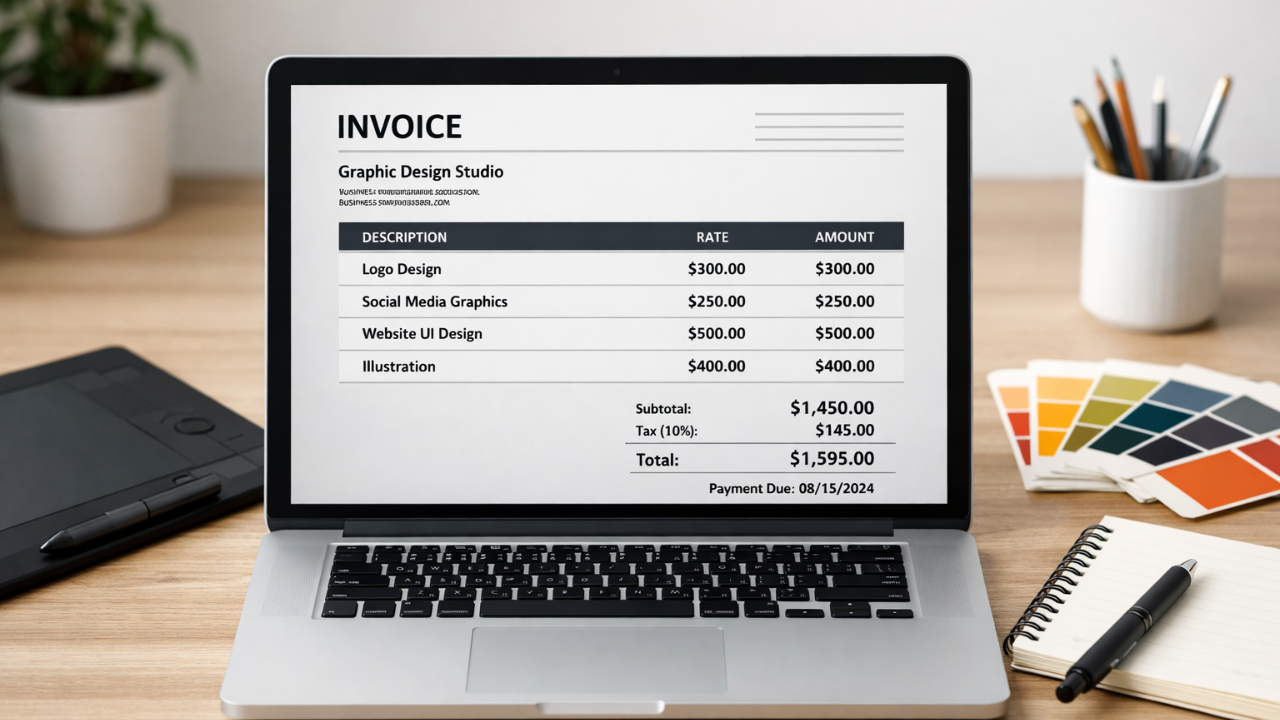
One of the most essential elements of an invoice is a brief yet thorough explanation of the goods or services rendered. This section explains exactly what the client is being charged for, helping to prevent confusion or disputes.
Create Professional Invoices with All Essential Elements
Stop worrying about missing invoice details. Create clean, accurate, and professional invoices in minutes with all essential invoice elements included — from invoice number to tax breakdown and payment terms.
Each item should have a brief but exact description and be listed separately. Add important details like the amount, number of hours spent, project milestones, or product specifications. Mention the time frame covered for service-based work (e.g., "Website Design – January 2026" or "Social Media Management – 20 Hours").
Being transparent develops trust. Clients are more likely to accept and promptly pay an invoice when they have a clear understanding of the charges. Steer clear of confusing phrases like "Services Rendered." Instead, keep your billing process clear and accountable by being accurate and professional.
5. Total Amount, Tax, and Subtotal
The breakdown of charges should be clear on a professional invoice. Indicate the final amount due, the subtotal, and any applicable taxes. These essential elements support the accuracy and transparency of your invoice.
For a deeper look, read our guide: GST Invoice Requirements for Indian Freelancers in 2026
The cost of goods or services before taxes is the subtotal. Next, display the tax amount individually and list any VAT or tax percentage. This aids in precise accounting and tax compliance.
Finally, make the total amount owed visible so that the client can know how much needs to be paid right away. To prevent mistakes, always double-check your calculations. A precise breakdown guarantees that your invoice appears organized and professional, fosters trust, and shortens payment delays.
6. Terms of Payment and Due Date
Your client's payment terms specify the time and method of payment. This is an essential part of every expert invoice. If you don't make the deadline obvious, clients might put off paying you because there was no deadline.
For example, "Due on 30 March 2026" or "Payment due within 7 days" should always be written. Don't use ambiguous terms like "Pay soon." You can get paid more quickly and with less uncertainty when dates are clear.
Payment arrangements like milestone payments, advance payments, or full payments upon project completion should also be mentioned. Additionally, make it explicit whether you impose late fines.
Clear and uncomplicated terms of payment demonstrate your professionalism and your expectation of prompt payment.
7. Bank Information and Payment Options
Making it simple for your client to pay you comes next when your invoice displays the entire amount and the due date. Make it clear which payment methods you accept, including PayPal, UPI, bank transfers, and other online payment methods.
Provide full bank information, such as account name, account number, bank name, branch (if necessary), and, if applicable, IFSC or SWIFT code, if you would rather transfer money by bank. Make sure you double-check these details because even a tiny error could cause your payment to be delayed.
Any payment reference, such the invoice number, that the client should use might also be mentioned. This makes it simple to keep track of payments.
Clients may swiftly process your invoice without needless back-and-forth correspondence when payment instructions are straightforward and unambiguous.
Common Errors to Avoid on Invoices
A minor error on your invoice can cause payment to be delayed and discredit your company. You can keep your clients' trust and be paid more quickly by avoiding typical mistakes.
Missing crucial information, like the invoice number, the due date, or the terms of payment, is a frequent error. Clients might not know how or when to pay without these.
Calculation errors are another issue. Inaccurate totals or tax amounts may cause misunderstandings and necessitate sending the invoice again. Before sending, always check your math.
It's also dangerous to send invoices in editable formats like Word or Excel. Formatting may alter, or information may inadvertently be changed. Send a PDF version at all times.
Prefer a ready-made file? Browse our free invoice templates in Word and Excel.
Finally, stay clear of ambiguous service descriptions. Using ambiguous words like "Work Done" might lead to conflicts. In your billing, be clear and precise.
Make a polished invoice that includes all the necessary components.
Putting the key components of an invoice together in a neat and polished manner is the next step after you have a clear understanding of them. In addition to having all the necessary information, a well-designed invoice also arranges and clearly displays it.
You can utilize a pre-made invoice template rather than making invoices by hand each time. This makes it easier to make sure that everything crucial is included, including client and business information, tax breakdowns, and terms of payment.
The process is further simplified by using an online invoice generator like InvoiceDesire. Just enter your information, review the totals, and get a polished PDF invoice. You may submit invoices with confidence and receive payment more quickly without worry or confusion if you follow the proper format and structure.
Final Thoughts
Knowing the key components of an invoice makes it easy to create a professional invoice. Little things like the invoice number, detailed descriptions, tax breakdown, and terms of payment have a significant impact on how people view your company.
An invoice that is thorough and orderly keeps your data organized, minimizes payment delays, and helps you prevent confusion. Additionally, it demonstrates your commitment to your profession and fosters confidence with your clientele.
Give everything a thorough inspection before mailing any invoices. Receiving payment is lot easier and less stressful when your invoices are correct, straightforward, and professional.
Found this helpful?
Share it with a fellow freelancer or business owner.
Keep reading
Best Billing Software for Small Business (2026 Comparison Guide)
Discover the best billing software for small business in 2026. Compare top tools, features, and pricing to find the right solution for faster invoicing and better payment management.

Freelance Checklist: 5 Things to Do Before You Send Your First Bill
Landing your first client is a win, but getting paid is the real goal. Follow this checklist to ensure your first billing cycle is seamless.
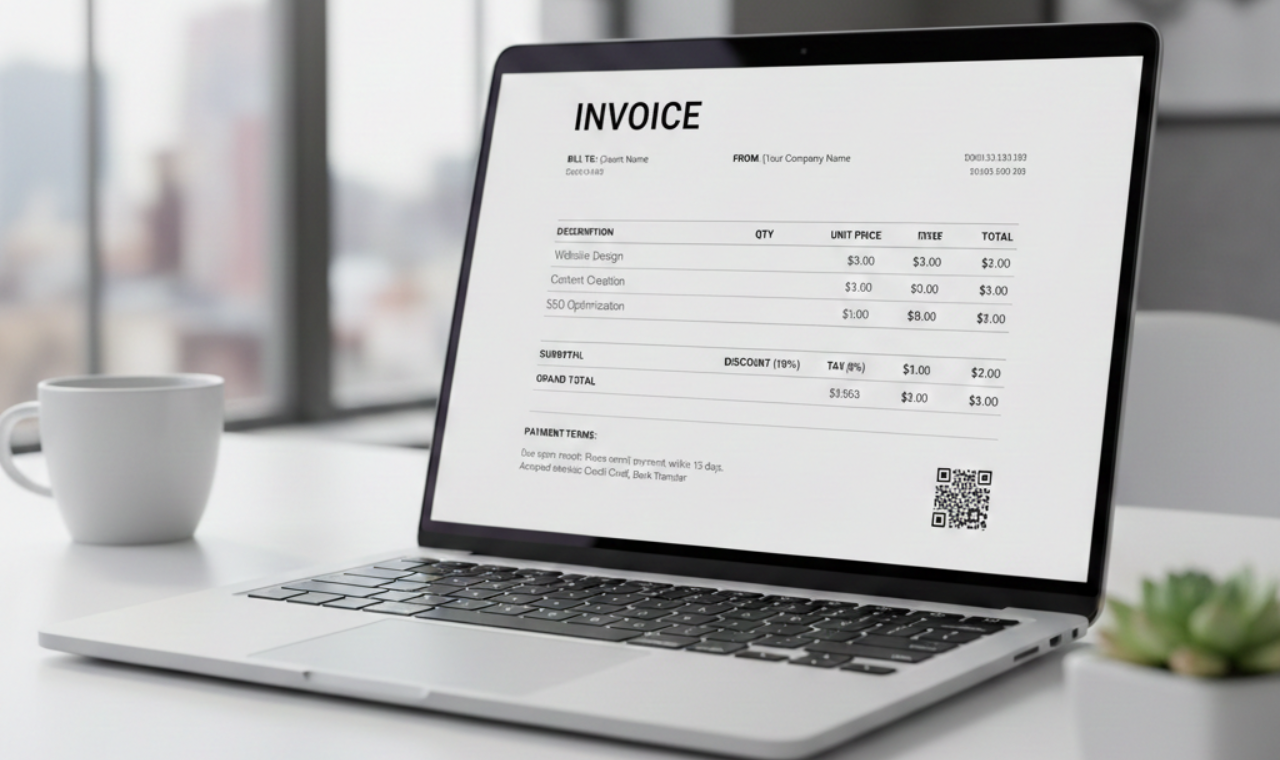
How to Create a Professional Invoice Your Clients Will Pay Faster (Step-by-Step Guide)
Creating a professional, well-structured invoice with clear pricing and payment terms helps you build trust, reduce delays, and get paid faster while maintaining a strong business image.
Digital Nomad Invoicing in 2026: How to Bill Clients Across Borders Without a Tax Headache
If you work as a digital nomad — billing London clients from Bali or invoicing New York businesses from Lisbon — the rules that govern what goes on your invoice are determined by your client's location, not yours. In 2026, cross-border tax authority data sharing has intensified and several major eco
How to Create Professional Quotations Online with a Free Quotation Maker
Create professional quotations online easily with a free quotation maker. Learn how to make business quotations, download PDFs, and send quotes to clients professionally.
How to Make an Invoice for Graphic Design Projects (Beginner’s Guide)
Learn how to make an invoice for graphic design projects with this beginner’s guide. Discover key elements, examples, and tips to create professional invoices easily.