How to Create a Professional Invoice Your Clients Will Pay Faster (Step-by-Step Guide)
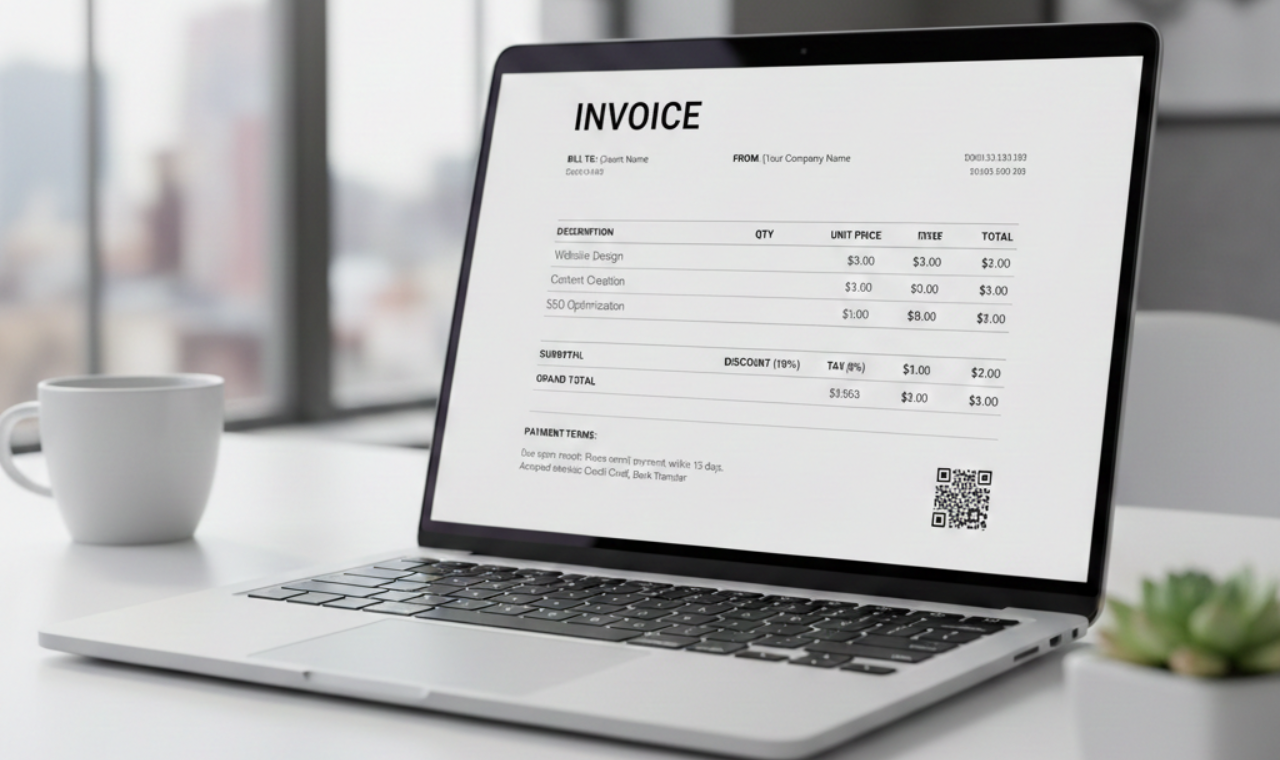
Getting paid on time involves more than simply producing excellent work; it also involves how you present your invoice. Many small business owners and freelancers place a lot of effort on providing high-quality services, but sometimes forget to provide a professional, unambiguous invoice. In actuality, your invoice is more than just a request for cash. It displays your professionalism, organization, and brand.
Customers are hesitant to pay when an invoice is unclear, lacking, or disorganized. Due to incomplete information, unclear pricing, or improperly defined payment terms, they might postpone payment. Late payments can also be the result of friction caused by the invoice rather than the clients' refusal to pay. Minor mistakes like incorrect service descriptions, missing invoice numbers, and missed deadlines might cause your cash flow to slack off.
For this reason, it's crucial to learn how to create a professional invoice. Clients can easily evaluate and approve your invoice in a timely manner if it has a clear structure, transparent price, and clear payment terms. You get paid more quickly if the process goes more smoothly. Without undesirable inquiries or payment delays, you will learn exactly how to write an invoice that appears professional, fosters trust, and expedites payment.
Create Your Professional Invoice in 60 Seconds
Stop using outdated templates. Generate clean, branded invoices instantly and get paid faster with our free online invoice generator.
How Do You Define a Professional Bill?
A professional invoice is a well-organized, polished document that clearly lists the goods or services rendered, the total amount owed, the terms of payment, and any pertinent business information. It aims to convey trust, clarity, and credibility in addition to making a payment request. You display your work in a way that represents your brand and business standards when you know how to create a professional invoice. It's not just about listing prices. A professional invoice usually contains your company's name, client information, a unique invoice number, detailed service descriptions, clear pricing, terms of payment, a deadline, and approved payment methods. There is no confusion and everything is easy to read.
Why It Is Important?
Your cash flow is directly impacted by invoices. A professional and unambiguous invoice minimizes back and forth inquiries, prevents miscommunications, and facilitates clients' speedy payment processing. A properly prepared invoice shows your clients that you take your business seriously and professionally. This impression fosters confidence, and trust expedites payments.
Basic vs. Professional invoices
A simple invoice can just include a brief description and the entire amount. It frequently lacks structure, branding, and explicit payment instructions. A professional invoice, on the other hand, has a clear payment schedule, thorough breakdowns, a clean invoice structure, and standardized branding. Although it might not seem like much, how you present yourself in business has a direct impact on how quickly you are paid.
Essential Elements of a Professional Invoice (Invoice Checklist)
You need more than simply the total money and a "thank you" message if you want to make a professional invoice that is paid more quickly. A comprehensive, well-organized invoice clears up any misunderstandings and facilitates client approval and payment processing. Make sure nothing crucial is overlooked by using this checklist.
1. Business Information
Start the invoice with your company's information at the top. Provide your company name, address, phone number, email address, and logo, if you have one. This gives your invoice trustworthy and an official appearance. Having clear business information also makes it easier for customers to get in touch with you right away if they have any questions.
2. Client Details
Include your client's name, address, phone number, and business name (if any). Verify your spelling twice. A professional invoice ought to seem unique rather than generic. It demonstrates expertise and attention to detail.
3. Unique Invoice Number
There should be an own invoice number for each invoice. This facilitates easy payment tracking for both you and your client. Additionally, it greatly simplifies record-keeping and accounting, particularly as your company expands.
4. Clear Description of Services
Avoid clear of ambiguous terms like "Design Work" or "Consulting." Rather, give a detailed account of what you delivered. Examples include "Social media management for January 2026" and "Website homepage design – 10 hours." Payment delays and conflicts are decreased by clear descriptions.
5. Pricing Breakdown
Give a detailed breakdown of prices. Display each service's quantity, rate, and subtotal. Openness fosters trust. When customers know exactly what they are paying for, they are more likely to make a quick payment.
6. Payment Terms
Payment terms for invoices should always be included, such as Net 15, Net 30, or due on receipt. If there are late costs, mention them. Unambiguous conditions of payment safeguard your cash flow while establishing expectations right away.
7. Due Date
The deadline should never be left open-ended. Put a precise date in place of "Pay soon," such as "Due: March 15, 2026." A set deadline decreases late payments and fosters urgency.
8. Payment Methods
Make paying you simple. Provide a list of every payment option you accept, including PayPal, credit cards, bank transfers, UPI, and others. You'll get your money sooner if it's easy to pay. When all of these components are included in a clean invoice style, your invoice appears trustworthy, professional, and well-organized, which directly improves your chances of receiving payment on schedule.
“A clear invoice is not just a request for payment — it’s a reflection of your professionalism.”
Step-by-Step Guide: How to Create a Professional Invoice
Now that you are aware of the components of a professional invoice, let's examine how to draft one that will seem professional and be paid more quickly. Make sure your invoice works for you rather than against you by following these easy steps.
For a deeper look, read our guide: Free Invoice Template in Excel.
Step 1: Include Your Logo
Initial impressions count. Add your company's logo, brand colors, and a standardized font style first. Like your website or portfolio, your invoice should be a reflection of your company identity. A branded invoice appears more authoritative and reliable to clients. Without having to worry about formatting, you can quickly add your logo and other features to your invoice using an online tool like InvoiceDesire.
Step 2: Use a Clear Invoice Format in Step Two
Everything is easier to read when an invoice is formatted neatly. Organize the sections as follows: invoice number, service breakdown, totals, and terms of payment at the top, business details at the bottom, and client information below. Stay clear of unnecessary design features, clutter, and excessive font usage. Structure and simplicity are usually the best. A professional invoice should appear well-structured rather than convoluted.
For a deeper look, read our guide: Simple Invoice Format in Word.
Step 3: Include Clear Pricing
An itemized pricing breakdown should always be included. Mention the final total, taxes (if any), subtotal, rate, and quantity. Confusion disappears and back-and-forth inquiries are avoided with clear pricing. Clients are more at ease approving payment promptly when they can plainly see how the amount was determined.
Step 4: Establish Clear Terms of Payment
Clearly state the terms of payment for your invoices. Mention the deadline, the permitted forms of payment, and any policies about late fees. "Payment due within 15 days," for instance, is far more explicit than "Please pay soon." Delays are decreased by having clear expectations.
Step 5: Check Again for Errors
Review everything carefully before sending. Check that the due date, bank details, totals, invoice number, and client's name are all spelled correctly. Small mistakes could cause payment delays or make your invoice look amateurish.
By regularly following to these rules or by using a trustworthy invoice generator like as InvoiceDesire, you can create invoices that improve cash flow, build trust, and speed up payment.
How to Send an Invoice to a Client Professionally
Making a polished invoice is only half the battle; how you deliver it also has a significant impact on how quickly you get paid. Your cash flow can be significantly improved with the right time, a clear message, and appropriate follow-up.
The Ideal Time to Issue an Invoice
Sending an invoice as soon as the task is finished or you reach a contract milestone is the best course of action. Avoid waiting a few days. The client will perceive it as less urgent the longer you delay. Send invoices for ongoing projects: After every milestone On a specific day each month (for ongoing work) As soon as the project is finished Quickly sending bills maintains payment in line with the quality of your work and demonstrates professionalism.
A format for Email
Your invoice email ought to be concise, polite, and clear. Here is a fundamental framework that you could employ:
The invoice numbered INV-2026-001 is payable by March 15, 2026.
Email Message: Hi [Client's Name],
I hope you are doing well. Attached is the invoice for [project/service name] that was completed on [date].
The due date for payment is March 15, 2026, and the overall amount payable is ₹18,000. Payment can be made through UPI or bank transfer (information is included on the invoice).
Feel free to ask me if you have any questions.
We value your patronage.
Best wishes,
[Name]
This approach is considerate, expert, and straightforward without appearing bothersome
Follow-Up Schedule
If funds are not received by the deadline:
Send a gentle reminder one to three days after the deadline.
Day 7: Mention the past-due status in a second reminder.
Day 14+: Refer to the payment requirements in a pleasant but firm follow-up.
Never lose your composure or professionalism. Maintaining a regular income flow while safeguarding your relationships is made possible by courteous and consistent follow-ups.
The faster you invoice, the faster you get paid.
The Benefits of Online Invoice Generation Over Manual Templates
Word or Excel templates are often the first tool used by independent contractors and small business owners. That may be effective at first, but as your job increases, manual templates can become laborious and prone to mistakes. A better long-term option is to use an online invoice generator if you really want to produce a professional invoice on a regular basis.
Conserves Time
Instead of manually modifying formatting, recalculating totals, and updating invoice numbers, an online invoice generator automates the entire process. All you have to do is input client information, add services, and the system will compute totals instantly. It now takes less than two minutes to do tasks that used to take twenty to thirty minutes.
Lowers Errors
Calculation errors, duplicate invoice numbers, and missing information are all more likely to occur with manual invoices. Payment delays can result from even minor mistakes. An online tool makes sure your invoice format is consistent every time, automatically calculates totals, and arranges information correctly.
It appears professional.
A neat, well-organized layout creates an indelible mark. Without having to pay for design knowledge, online invoice generators are made with professional layout in mind, ensuring that your invoice always looks professional and ready to use.
Establishes Trust
When invoices appear formal and organized, clients are more comfortable paying them. Clear, branded, and easily comprehensible invoices increase credibility and decrease hesitancy.
You can quickly create neat, expert invoices without having to deal with formatting or calculations by using a simple program like InvoiceDesire. Compared to manual templates, it is quicker, simpler, and more dependable.
In conclusion
One of the most important things a freelancer or business owner can learn is how to make a good invoice. Presenting your work with confidence and clarity is more important than simply requesting payment. It is easier for clients to evaluate and pay without hesitation when an invoice is well-structured and has clear payment terms, upfront pricing, and a specified due date.
Late payments are frequently not personal. They occur as a result of something being ambiguous, absent, or perplexing. You may streamline the process by taking the time to correctly arrange your invoice and send it on time. Your cash flow can noticeably improve with that little effort.
Your professional image can be enhanced and needless follow-ups can be decreased with small changes like properly itemizing services, adopting strict payment terms, and issuing bills on time. Customers appreciate clarity, and trust is developed over time through simple interactions.
Include invoicing in your work routine rather than putting it off. A consistent and easy invoicing procedure will free up more time for you to concentrate on expanding your company rather than chasing down funds. And you should focus all of your energies there.
Found this helpful?
Share it with a fellow freelancer or business owner.
Keep reading

Best Billing Software for Small Business (2026 Comparison Guide)
Discover the best billing software for small business in 2026. Compare top tools, features, and pricing to find the right solution for faster invoicing and better payment management.

Freelance Checklist: 5 Things to Do Before You Send Your First Bill
Landing your first client is a win, but getting paid is the real goal. Follow this checklist to ensure your first billing cycle is seamless.
Digital Nomad Invoicing in 2026: How to Bill Clients Across Borders Without a Tax Headache
If you work as a digital nomad — billing London clients from Bali or invoicing New York businesses from Lisbon — the rules that govern what goes on your invoice are determined by your client's location, not yours. In 2026, cross-border tax authority data sharing has intensified and several major eco
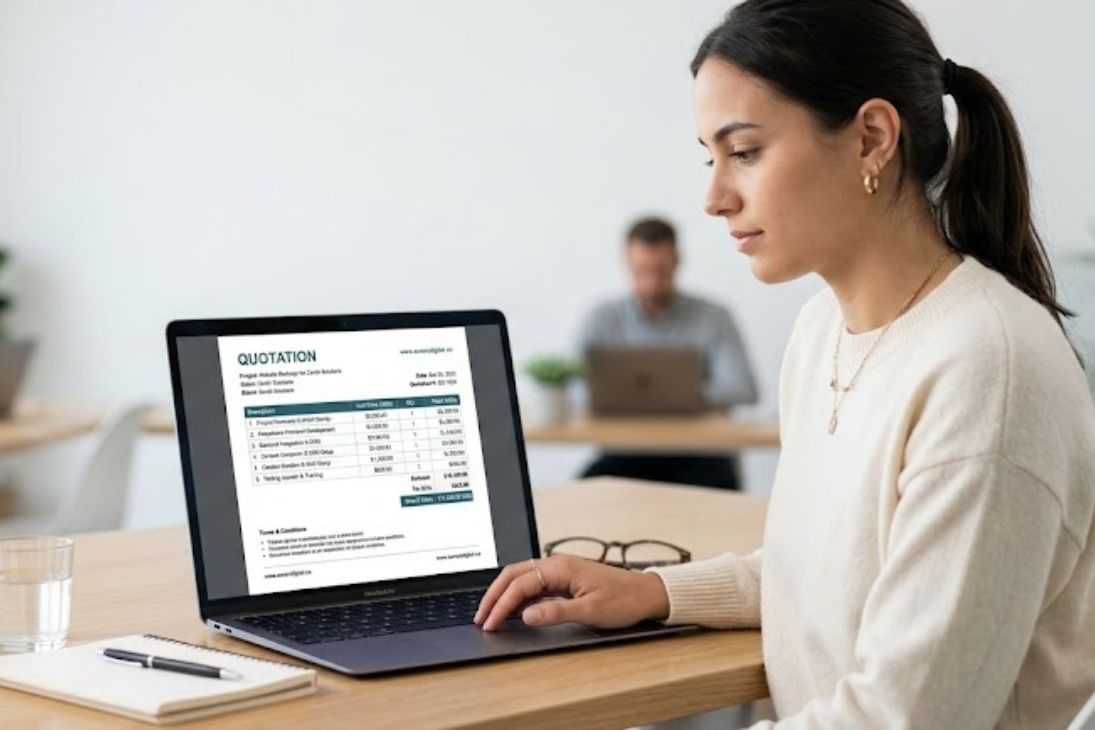
How to Create Professional Quotations Online with a Free Quotation Maker
Create professional quotations online easily with a free quotation maker. Learn how to make business quotations, download PDFs, and send quotes to clients professionally.

7 Essential Elements Every Professional Invoice Must Have
Don't let a missing detail delay your payment. Ensure your invoices are professional, legal, and ready for fast processing.
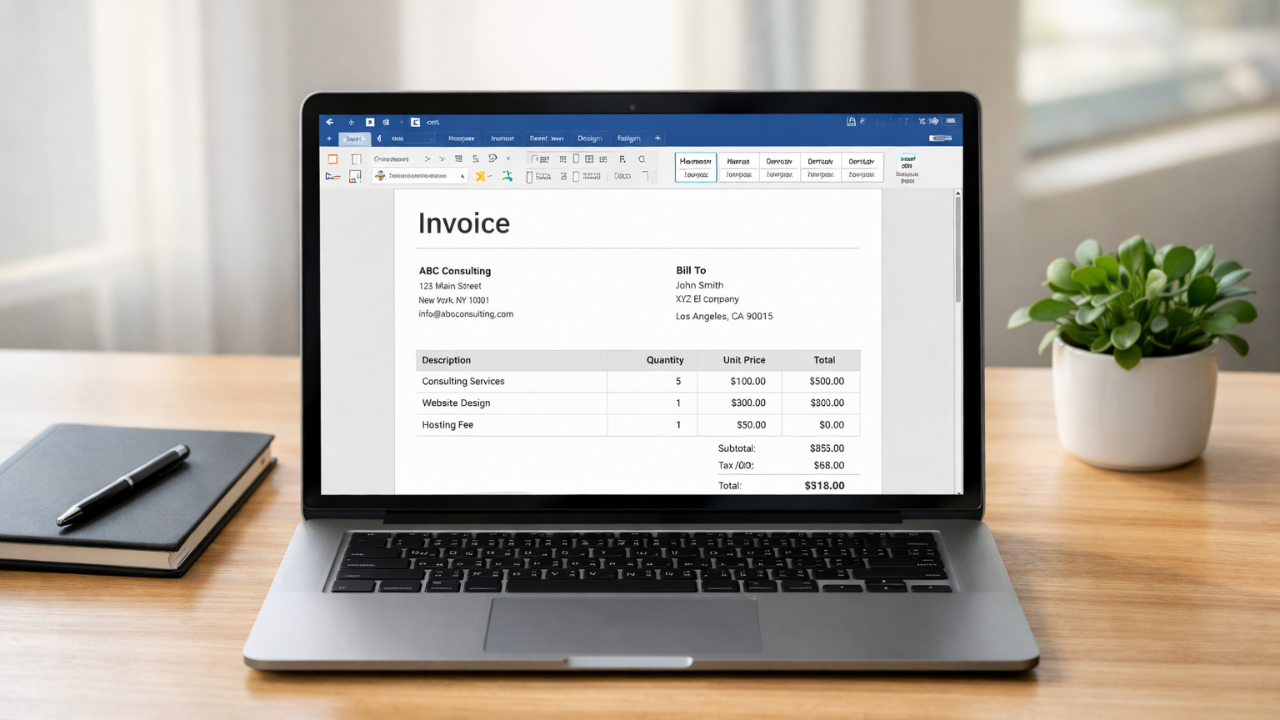
Simple Invoice Format in Word (Free Template for Small Businesses)
Learn how to create a simple invoice format in Word with easy examples, essential invoice elements, and step-by-step guidance.