How to Send a Deposit Invoice: Request Advance Payment as a Freelancer (2026 Guide)
Why Freelancers Ask for Deposits ?
Starting a new project takes time, effort, and sometimes money. As a freelancer, you may need to spend hours planning, buying materials, or saving time for a client before receiving the full payment. This is why many freelancers ask for an advance payment before starting work.
A deposit invoice is a simple way to request part of the project cost upfront. It helps confirm that the client is ready to move forward and gives you some payment security.
Create Professional Invoices in Minutes
Generate clean, accurate invoices instantly with our free online invoice generator. No signup required. Fast, simple, and professional.
If you want to learn how to send a deposit invoice, this guide will explain when to request an advance payment, how much to charge, what details to include, and how to ask clients for an upfront payment in a clear and professional way.
What Is a Deposit Invoice?
A deposit invoice is a document a freelancer sends to a client to request part of the total project cost before starting the work. It is also called an advance payment invoice or upfront payment invoice.
For example, suppose you agree to design a website for $1,000. You ask the client to pay 30% before you begin. You can send a deposit invoice for $300 and collect the remaining $700 after completing the project.
A deposit invoice usually includes the total project cost, the deposit amount, the payment due date, and the remaining balance. It helps both you and your client understand how much needs to be paid at each stage.
Remember, a deposit is part of the agreed project price, not an extra charge. Once the client pays it, you should record that payment and show it when preparing the final invoice.
When Should a Freelancer Send a Deposit Invoice?
A freelancer can send a deposit invoice when a client agrees to start a project but the full payment will be made later. Asking for an advance payment is especially useful for projects that need a lot of time, planning, or money.
Here are some common situations when you should consider sending a deposit invoice:
Before starting a large project: If a project will take several weeks or months, an upfront payment helps you get started with some money already received.
When working with a new client: A deposit gives you some payment security before you spend time on the work.
For custom work: If you are creating a website, logo, design, or other custom service, a deposit helps confirm that the client is serious about the project.
When you need to buy materials: Photographers, event planners, and other service providers may need to pay for materials or bookings before the work begins.
For long-term projects: If the work has different stages, you can agree on advance payments at the beginning of each stage.
Before sending the deposit invoice, discuss the payment amount, due date, and refund terms with your client. Make sure both sides agree before you begin. This helps avoid payment confusion later.
How Much Deposit Should a Freelancer Charge?
There is no fixed deposit amount for every freelance project. It depends on the type of work, project cost, time needed, and your agreement with the client. Many freelancers ask for 25%, 30%, or 50% of the total price before starting work.
Here are some common deposit amounts:
25% deposit: Suitable for smaller projects or work that does not need much time or upfront cost.
30% deposit: A good option for many freelance projects where you need some payment before getting started.
50% deposit: Often used for large custom projects, such as website design, branding, or photography work.
For example, if your total project price is $1,000, your deposit could look like this:
Deposit Percentage: 25%, 30%, 50%
Advance Payment: $250, $300, $500
Remaining Balance: $750, $700, $500
Choose an amount that covers your initial time and costs without making payment difficult for your client. Always discuss the deposit percentage and payment terms before sending the invoice.
Tip: Write the agreed deposit amount in your project agreement or email. This helps both sides understand what needs to be paid before work begins.
What Information Should a Deposit Invoice Include?
A deposit invoice should clearly explain how much the client needs to pay before the project starts. It should also show the total project price so the client knows how much is still left to pay.
Here are the important details to include in your deposit invoice template:
Invoice number: Add a unique invoice number to help you track the payment.
Invoice date: Mention the date when you send the deposit invoice.
Your business details: Include your name or business name, address, email, and contact number.
Client details: Add the client's name, business name, and contact information.
Project description: Briefly explain the work or service you will provide.
Total project cost: Show the full agreed price before deducting the deposit.
Deposit amount: Clearly mention the advance payment amount and percentage, such as 30% of the total cost.
Payment due date: Tell the client when the deposit payment should be made.
Payment method: Add your accepted payment options, such as bank transfer or another agreed method.
Remaining balance: Show how much the client will need to pay after the deposit.
You should also add a short note explaining that the deposit will be counted towards the final project cost.
Before sending the invoice, check all amounts and payment details carefully. If taxes apply to the advance payment, include them according to the rules in your country. A clear deposit invoice helps your client understand the payment and avoids confusion later.
How to Send a Deposit Invoice Step by Step
Sending a deposit invoice is simple when you have agreed on the project price and payment terms with your client. Follow these steps to request an advance payment in a clear and professional way.
Step 1: Agree on the project price
Before starting work, discuss the full project cost with your client. Make sure both of you agree on the price, work details, and payment schedule.
Step 2: Decide the deposit amount
Choose how much you want to collect upfront. For example, you can ask for 30% of the total project cost. Make sure the amount is suitable for the work and any initial expenses.
Step 3: Create the deposit invoice
Add your business details, client information, project description, total price, deposit amount, and payment due date. Clearly mention that this invoice is for an advance payment.
Step 4: Add payment instructions
Tell your client how they can pay. Include your accepted payment methods and the details needed to complete the payment.
Step 5: Send the invoice to your client
You can send the invoice as a PDF through email or another agreed method. Write a short message explaining that the deposit is required before the project begins.
Step 6: Confirm the payment
Once the client makes the payment, check your bank or payment account. Send a payment confirmation or receipt if needed.
Step 7: Start the project
After receiving the agreed deposit, begin the work according to your project plan. Keep a copy of the invoice and payment record for your accounts.
Following these steps makes it easier to request advance payment and keep your freelance work organized.
Deposit Invoice Example for Freelancers
Let's understand how a deposit invoice works with a simple example.
Suppose you are a freelance web designer. A client hires you to create a website for $1,000. You both agree that the client will pay 30% before the work starts and the remaining amount after the project is completed.
Your deposit invoice can look like this:
Invoice Detail
Website design project - $1,000
Deposit required (30%) - $300
Remaining balance - $700
You will send the client a deposit invoice for $300. Once the payment is received, you can start the website project.
After completing the work, send the final invoice showing the full project cost of $1,000, the $300 deposit already paid, and the remaining $700 to be paid.
This way, your client knows exactly how much they have paid and how much is still due. It also helps you avoid charging the same amount twice.
How to Invoice the Remaining Balance After a Deposit
Once your client has paid the deposit and you have completed the project, the next step is to request the remaining balance. You should send a final invoice that clearly shows the full project cost, the deposit already received, and the amount still due.
Follow these simple steps:
Show the full project cost: Mention the original agreed price for the complete work.Add the deposit payment: Show the amount the client has already paid.Calculate the remaining balance: Subtract the deposit from the total project cost.Add a new due date: Give the client a clear date to make the final payment.Send the final invoice: Share the updated invoice and keep a copy for your records.
For example, if your project cost is $1,000 and the client has already paid a $300 deposit, your final invoice should show:
Detail
Total project cost - $1,000
Deposit already paid - -$300
Remaining balance due - $700
Make sure the deposit is clearly marked as paid. This helps your client understand the final amount and prevents double payment. Also, follow the tax and invoice rules that apply in your country.
Create Professional Deposit Invoices With Invoice Desire
Creating a clear invoice helps your clients understand the payment amount and project details. With Invoice Desire, you can create professional invoices online for free without creating an account.
Add your business details, client information, project description, prices, and applicable taxes. You can download the invoice as a PDF and send it to your client by email.
You can also explore our free invoice templates to find a suitable design for your freelance business.
Use clear invoice details to show the deposit received and the remaining balance. This makes it easier to manage payments and keep your freelance records organised.
FAQs About Deposit Invoices
1. Is a deposit invoice the same as an advance payment invoice?
Yes. Both are used to request part of the payment before work begins. The amount paid is later counted towards the total project cost.
2. How much deposit should a freelancer ask for?
Many freelancers ask for 25%, 30%, or 50% of the total project price. The right amount depends on the type of work, project size, and agreement with the client.
3. Should I start work before receiving the deposit?
It is generally better to wait until the agreed deposit has been received. This helps confirm the client's commitment and reduces the risk of payment problems.
4. Can a freelancer refund a project deposit?
Yes. A freelancer may need to refund all or part of a deposit depending on the project agreement and the reason for cancellation. Always explain the refund terms to the client before starting work.
5. Do I need to send another invoice after receiving a deposit?
Yes, if there is still a balance to collect. Send a final invoice showing the full project cost, the deposit already paid, and the remaining amount due. This helps prevent double payment and keeps your records clear.
Conclusion
Knowing how to send a deposit invoice helps freelancers request advance payment and manage projects with less payment confusion. Before starting work, agree on the deposit amount, payment date, and project terms with your client.
Always show the deposit clearly and subtract it from the final project cost when requesting the remaining balance. Keep copies of your invoices and payment records so you can track every payment easily.
A clear payment process helps you work with confidence and build better relationships with your clients.
Found this helpful?
Share it with a fellow freelancer or business owner.
Keep reading

10 Reasons Clients Don't Pay Invoices (And How to Fix Them)
Why Your Client Is Not Paying Your Invoice | 10 Real Reasons

7 Essential Elements Every Professional Invoice Must Have
Don't let a missing detail delay your payment. Ensure your invoices are professional, legal, and ready for fast processing.

Accepting Online Payments: Best Methods for Faster Invoicing in 2026
Accepting online payments with clear instructions, multiple options, and secure methods helps you reduce delays, improve cash flow, and get paid faster on every invoice.

AI-Generated Invoice Fraud: How Freelancers Can Protect Themselves in 2026
Generative AI has given fraudsters a powerful new tool: invoice fraud that is faster, cheaper, and far more convincing than anything that came before. In early 2026, the ICAEW warned that criminals are using AI to produce fake invoices at a quality that makes them genuinely difficult to detect. For
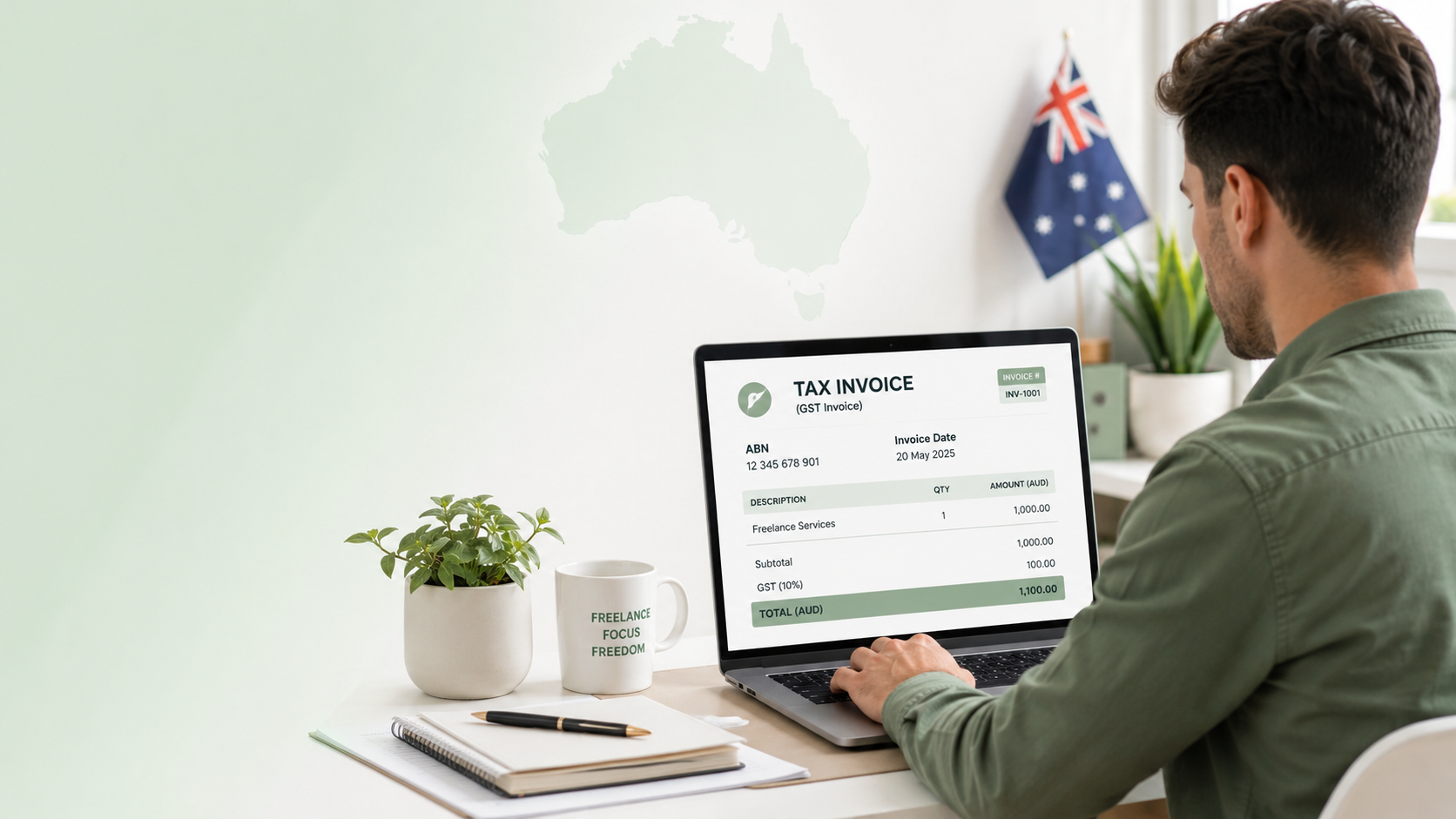
Australia's 7 Mandatory Tax Invoice Fields: The GST Compliance Checklist for Freelancers (2026)
If you are a freelancer operating in Australia, the ATO has strict requirements for what must appear on every tax invoice. Missing even one of the seven mandatory fields means your client cannot claim a GST input tax credit — which can damage professional relationships and trigger compliance questio
Belgium's B2B E-Invoicing Mandate in 2026: A Freelancer's Essential Compliance Guide
On 1 January 2026, Belgium became one of the first EU countries to mandate structured e-invoicing for all B2B transactions between VAT-registered businesses. If you are a freelancer working with Belgian business clients, your plain PDF invoice may no longer be legally sufficient.