Belgium's B2B E-Invoicing Mandate in 2026: A Freelancer's Essential Compliance Guide
What Is Belgium's 2026 B2B E-Invoicing Mandate?
Belgium changed the way businesses send invoices from 1 January 2026. If you run a business in Belgium and are liable for VAT, you generally need to use a structured electronic invoice when billing another business for a transaction covered by the new rules.
This means a normal PDF invoice sent by email is no longer enough for most B2B invoices covered by the mandate. The invoice needs to be created in a format that accounting software can read and process automatically.
Create Professional Invoices in Minutes
Generate clean, accurate invoices instantly with our free online invoice generator. No signup required. Fast, simple, and professional.
These invoices are normally exchanged through Peppol, a network used to send structured business invoices securely between compatible invoicing and accounting systems.
The rule mainly covers B2B transactions, meaning invoices between businesses. If your clients are private individuals, this particular 2026 B2B requirement does not apply to those invoices. However, a business that only works with private customers still needs to be ready to receive structured electronic invoices from its own suppliers when required.
For freelancers, the important point is simple: if you operate as a Belgian VAT-liable business and work with business clients, your old PDF-and-email invoicing process may no longer be enough. You need an invoicing setup that can create, send, receive, and handle structured e-invoices.
Does the E-Invoicing Rule Apply to Freelancers?
Yes, it can apply to freelancers. The important thing is not whether you call yourself a freelancer, consultant, contractor, or self-employed professional. What matters is how your business is registered for VAT and who you are invoicing.
If you are a Belgian freelancer who is liable for VAT and you send invoices to other Belgian businesses, the 2026 B2B e-invoicing rules generally apply to you. This includes many small businesses and self-employed professionals.
For example, imagine you are a freelance graphic designer in Belgium. You create a logo for a Belgian company and send them an invoice. If the work falls under the B2B rules, you need to send the invoice as a structured electronic invoice rather than simply emailing a PDF.
The same applies to many other freelancers, such as developers, photographers, writers, marketers, architects, and consultants who invoice businesses.
There are exceptions and special cases, so not every invoice a freelancer sends will automatically fall under the mandate. In particular, invoices to private customers are outside this specific B2B requirement.
One thing freelancers should not overlook is receiving invoices. Even if you mainly work with private customers and do not need to send B2B e-invoices, you may still need to be able to receive structured electronic invoices from businesses you buy from.
B2B vs B2C: When Does the Rule Apply?
The easiest way to understand Belgium's e-invoicing rule is to first look at who your client is.
B2B: Business to Business
B2B means you are billing another business. If both businesses fall under the Belgian VAT rules, the 2026 e-invoicing requirement generally applies.
For example, you are a freelance web developer and build a website for a Belgian company. You need to issue a structured electronic invoice for that work if the transaction is covered by the rules.
This is where freelancers need to pay the most attention. If you regularly work with companies, agencies, shops, or other businesses, you should make sure your invoicing software supports the required format and delivery method.
B2C: Business to Consumer
B2C means you are billing a private individual rather than a business. These invoices are not covered by this specific Belgian B2B e-invoicing obligation.
For example, if you are a photographer and provide a personal photoshoot for an individual customer, the 2026 B2B mandate does not apply to that invoice simply because you are a business.
However, B2C does not mean you can ignore e-invoicing completely. If your business buys goods or services from other businesses, you may still need to receive structured electronic invoices from those suppliers.
A simple rule to remember: Selling to a business → check the B2B e-invoicing requirement. Selling to a private customer → the 2026 B2B mandate does not apply to that invoice.
What Is a Structured Electronic Invoice?
A structured electronic invoice is an invoice made in a format that accounting software can read directly.
This is different from a normal PDF. A PDF may look like a proper invoice when you open it, but the information inside it is mainly designed for people to read. Your client's accounting software usually cannot treat it as structured invoice data without extra processing.
A structured e-invoice stores the invoice details in an organised digital format. Information such as the invoice number, date, customer details, amounts, VAT, and payment information can be read by the software.
Think of it this way:
Paper invoice: made for people to read.
PDF invoice: digital document that looks like a paper invoice.
Structured e-invoice: digital invoice that software can read and process.
For Belgium's B2B e-invoicing rules, this difference matters. Sending a PDF by email does not normally meet the requirement for a covered B2B transaction.
The structured invoice also makes it easier for the buyer's accounting system to record the invoice without someone having to type all the details manually.
You do not need to understand the technical code behind the invoice to use it. Your invoicing or accounting software normally creates the structured invoice for you. The important part is choosing software that supports the Belgian requirements and can connect to the Peppol network.
What Is Peppol and Why Do Belgian Freelancers Need It?
Peppol is a network that allows businesses and their invoicing software to exchange electronic invoices in a standard way.
You can think of it like a delivery network for business invoices. Instead of sending a PDF to your client's email and hoping they enter the details into their accounting system, your invoicing software can send the structured invoice through Peppol to the software used by your client.
For a Belgian freelancer, this is important because structured B2B invoices covered by the 2026 rules are generally exchanged through Peppol.
You do not normally need to become a Peppol expert or learn how the network works. Your main job is to use invoicing software that supports Peppol.
For example, if you finish a project for a Belgian company, you create the invoice in your software as usual. The software prepares it in the required structured format and sends it through the Peppol network. Your client's system can then receive and process the invoice.
You also do not necessarily need to ask every client for a special “Peppol ID.” Your software can usually help identify the correct recipient.
Before choosing an invoicing tool, check that it can send and receive structured e-invoices through Peppol. This is more important than simply having a tool that can create attractive PDF invoices.
Can You Still Send a PDF Invoice by Email?
You can still create and use PDF invoices in situations where the Belgian B2B e-invoicing mandate does not apply. But for a B2B transaction covered by the 2026 rules, a PDF sent by email is not enough.
This is an important change for freelancers who have always worked with simple PDF invoices.
For example, suppose you complete a €1,000 project for a Belgian company. You create your usual invoice, save it as a PDF, and email it to the client. If the transaction is covered by the B2B e-invoicing rules, sending only that PDF does not meet the new requirement.
Instead, the invoice needs to be sent as a structured electronic invoice, normally through Peppol.
This does not mean PDFs suddenly have no use. You may still want a PDF copy for your own records or for easier viewing. Your client may also use a PDF or another readable version alongside the structured invoice.
The important difference is that the structured e-invoice is the official invoice for the covered B2B transaction, while the PDF is mainly useful for human viewing.
So, if your current process is simply “create PDF → attach to email → send,” check your invoicing software before your next B2B invoice. You may need to change the way the invoice is delivered.
What Software Do Freelancers Need for E-Invoicing?
You do not need complicated accounting software just because Belgium introduced mandatory B2B e-invoicing. But you do need an invoicing or accounting system that can handle structured electronic invoices and connect to the Peppol network.
A basic PDF invoice maker is not enough for covered B2B invoices if it cannot create and send structured e-invoices.
When choosing software, check for these features:
Peppol connection: The software should be able to send and receive invoices through Peppol.
Structured invoice support: It should create invoices in the required digital format.
Invoice management: You should be able to keep track of invoices you send and receive.
Credit notes: The system should support credit notes when you need to correct or cancel an invoice.
Easy invoice creation: You should not have to enter the same customer and business details every time.
Record keeping: You should be able to keep your invoice records properly for your accounting needs.
For a freelancer, ease of use matters. You may only send a few invoices each month, so there is little benefit in choosing software that is difficult to understand.
Before signing up for an invoicing service, check whether Peppol sending and receiving are actually included. Some tools may create professional-looking invoices but only offer PDF or other basic electronic formats.
Your software should take care of most of the technical work. You mainly need to enter the correct customer, service, price, VAT, and payment details, then review the invoice before sending it.
What Information Goes Into a Belgian E-Invoice?
Moving from PDF invoices to structured e-invoices does not mean you need to completely rethink what you charge your client. You still need to provide the important details that identify the sale, the businesses involved, and the amount to be paid.
The exact information can depend on the type of transaction and your VAT situation, but a typical Belgian business invoice includes details such as:
Your business name and address
Your VAT number
Your client's business name and address
Your client's VAT number, where required
Invoice number
Invoice date
Date of the service or delivery, when different from the invoice date
Clear description of the goods or services
Quantity or hours, where relevant
Price before VAT
VAT rate and VAT amount, when applicable
Total amount to pay
Payment terms or due date
Bank or payment details, where relevant
The structured format puts this information into fields that accounting software can understand. This is one of the main differences from a simple PDF invoice.
It is also important to check your invoice before sending it. A structured invoice can be delivered correctly through Peppol, but that does not fix incorrect customer details, prices, VAT numbers, or amounts.
If you already have a good invoice template, you do not necessarily need to change all of your wording. The bigger change is how the invoice is created and exchanged.
Do Freelancers Need to Receive E-Invoices Too?
Yes. Receiving e-invoices is an important part of Belgium's 2026 rules.
Even if you do not send many B2B invoices yourself, your business may receive invoices from suppliers, contractors, or other businesses. If those invoices fall under the Belgian e-invoicing rules, you need a system that can receive and handle them.
For example, imagine you are a freelance photographer. You may send invoices to private customers, so the B2B sending requirement may not apply to those customers. But you could still receive invoices from a Belgian business for studio rental, equipment, printing, advertising, or other services.
Those supplier invoices may arrive as structured electronic invoices through Peppol.
This means your invoicing setup should not only answer the question, “Can I send an e-invoice?” You should also ask, “Can I receive one?”
Your software should give you a way to:
Receive structured invoices through PeppolView the invoice detailsKeep the invoice for your recordsSend the information to your accountant or accounting systemFind the invoice later when you need it
You do not have to manually read a technical file or convert it yourself. With suitable software, the invoice can be received and displayed in a normal, easy-to-read format.
So even freelancers who mainly deal with private customers should not completely ignore the new system. Being ready to receive e-invoices can be just as important as being ready to send them.
What If Your Client Isn't Ready for Peppol?
It can happen that you are ready to send a structured e-invoice, but your client is still using an old invoicing system.
In that situation, do not simply go back to sending a PDF without checking what applies to the transaction. For B2B invoices covered by the Belgian rules, the structured electronic invoice is the required form.
Belgian guidance allows an alternative secure method in certain situations, particularly when the normal electronic exchange cannot be used. This should be agreed between the businesses rather than decided by one side without discussion.
So, if a client tells you, “We don't have Peppol yet,” ask what invoicing method they can properly receive and whether an agreed alternative is available.
It is also a good idea to contact the client before the invoice is due. You can keep the conversation simple:
Confirm that your business is ready for e-invoicing.Check whether their system can receive structured invoices.Ask how they handle invoices if their normal system is not available.Keep any agreed arrangement clear.
Do not assume that your client being unprepared automatically means you can send a PDF and ignore the requirement. The rules apply to the transaction, not simply to whether one business has updated its software.
If you regularly invoice the same companies, checking this early can save you from a rejected invoice or payment delay later.
What Happens If You're Not Ready?
Belgium's B2B e-invoicing requirement has been in force since 1 January 2026, so businesses covered by the rule should already have a working process for sending and receiving structured invoices.
If you continue sending only PDF invoices for B2B transactions that fall under the mandate, the invoice may not meet the legal requirements. This can also create practical problems, especially if your client's accounting system is expecting a structured invoice.
There can also be tax and administrative consequences when a business does not follow the invoicing rules. The exact consequences depend on the situation, so it is better not to assume that every mistake will result in the same penalty.
For a freelancer, the safest approach is to fix the process rather than wait for a problem.
If you are still using a basic PDF invoice system, check these things first:
Is your business covered by the Belgian B2B e-invoicing rules?
Can your invoicing software create structured invoices?
Can it send and receive invoices through Peppol?
Are your business and customer details correct?
Can you keep the invoices and related records properly?
There was some temporary flexibility at the beginning of 2026 for businesses that had taken timely and reasonable steps to comply. That should not be treated as a permanent exemption.
If your invoicing system is still not ready, now is the time to update it rather than relying on temporary tolerance or hoping your clients will accept a PDF.
Belgium E-Invoicing Checklist for Freelancers
If you are a freelancer working in Belgium, you do not need to make e-invoicing complicated. Start by checking whether your business and the invoices you send are covered by the B2B rules.
Use this checklist to make sure your invoicing process is ready:
Before You Send an Invoice
Check whether your client is a business or a private customer.Confirm that your business details and VAT number are correct.Make sure your client's business details and VAT information are correct where required.Use a proper invoice number and invoice date.Add a clear description of your work or services.Check the price, VAT, and total amount carefully.
Check Your Software
Make sure your invoicing software supports structured electronic invoices.Confirm that it can connect to Peppol.Make sure you can both send and receive e-invoices.Check that you can keep your invoices and records safely.Make sure the software can handle credit notes if you need them.
Before Sending a B2B Invoice
Do not simply create a PDF and email it if the transaction is covered by the 2026 B2B requirement. Send the structured e-invoice through the supported electronic channel.
Keep Your Records
Save your invoices and related records according to the applicable Belgian record-keeping rules. Make sure the information remains readable and can be retrieved when needed.
One Final Check
Before sending your first e-invoice through the new system, it is worth testing the process with your software provider or accountant. Make sure the invoice reaches the right customer and that both sides can process it correctly.
Once this setup is working, your normal invoicing routine should be much simpler. You create the invoice, check the details, and let your software handle the electronic delivery.
How Invoice Desire Can Help With Your Invoicing Workflow?
Keeping your invoices organised becomes more important when your clients expect faster and cleaner digital processes.
Invoice Desire can help freelancers create professional invoices without spending a lot of time building each invoice from scratch. You can add your business details, client information, services, prices, taxes, and payment details, then create an invoice ready to share with your client.
It can be especially useful if you currently create invoices manually or keep changing the same document for every new client.
A simple invoicing workflow can look like this:
Add your business details once.Add your client's information.Enter the services or products you provided.Check the amount and tax details.Create the invoice.Keep a copy for your records.Send it to your client using the required method for that transaction.
For Belgium, remember that using an invoice generator alone does not automatically mean you are compliant with the 2026 B2B e-invoicing rules. Covered B2B transactions require a structured electronic invoice, so you should make sure your invoicing setup supports the required process, including Peppol where applicable.
The goal is to make everyday invoicing easier while keeping your records clear and organised. If you work with different types of clients, always check which invoicing rules apply to each transaction.
Conclusion
Belgium's B2B e-invoicing rules have changed the way many freelancers need to handle business invoices. Since 1 January 2026, a structured electronic invoice is generally required when a Belgian VAT-liable business invoices another business for a transaction covered by the rules.
For freelancers, the biggest change is simple: a PDF sent by email is no longer enough for covered B2B invoices. Your invoicing setup needs to support structured e-invoices and, in general, Peppol for sending and receiving them.
You do not need to become a technical expert to handle this. Choose suitable invoicing or accounting software, keep your business and customer details accurate, and make sure you can receive invoices as well as send them.
If you are still using an old PDF-only process, it is worth checking your setup now. Getting the right system in place can help you avoid rejected invoices, payment delays, and unnecessary problems with your business clients.
The good news is that once your software is properly set up, e-invoicing can become a normal part of your regular invoicing routine rather than something you have to think about every time.
Found this helpful?
Share it with a fellow freelancer or business owner.
Keep reading

France E-Invoicing Mandate September 2026: What Every Freelancer Must Do Now
France's long-anticipated e-invoicing mandate goes live on 1 September 2026. While large enterprises have been preparing for months, many independent freelancers and auto-entrepreneurs remain unaware that they will be affected—and that the deadline to receive structured e-invoices is just weeks away
Poland's KSeF Mandatory E-Invoicing in 2026: A Freelancer's Compliance Guide
Poland became one of the first EU countries to enforce mandatory B2B e-invoicing in 2026 through its Krajowy System e-Faktur (KSeF) platform. If you are a freelancer or sole trader doing business in Poland — or invoicing Polish clients in a B2B context — understanding KSeF is now a compliance requir

Can ChatGPT Create Invoices? Pros, Risks & Accuracy Explained
Can ChatGPT create invoices? Learn the benefits, risks, accuracy, and limitations of using AI for invoicing.
Best Billing Software for Small Business (2026 Comparison Guide)
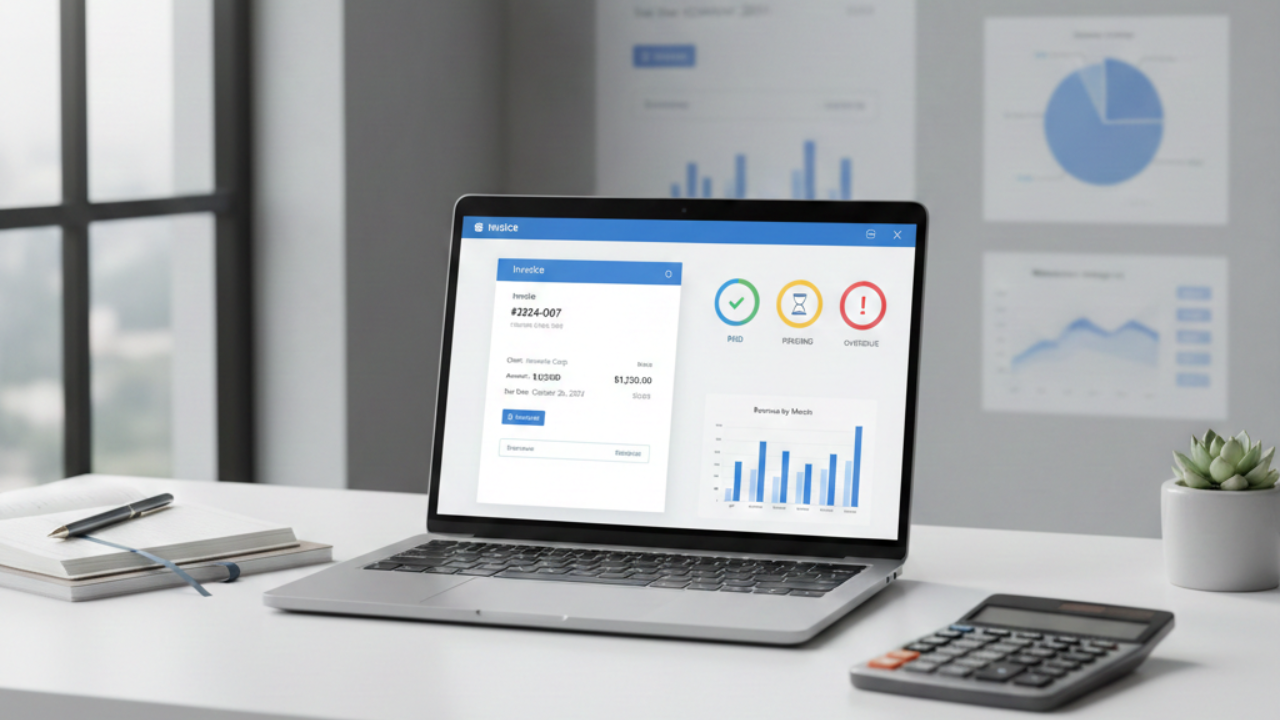
Discover the best billing software for small business in 2026. Compare top tools, features, and pricing to find the right solution for faster invoicing and better payment management.

Why Your Invoicing Tool's Privacy Policy Is a GDPR Risk You Haven't Considered
Most freelancers choose an invoicing tool based on price or ease of use. Very few ask the more important question: where does my client data actually go? In 2026, with GDPR enforcement at record levels and data breaches increasingly targeting small businesses, the answer has real consequences.
Digital Nomad Invoicing in 2026: How to Bill Clients Across Borders Without a Tax Headache
If you work as a digital nomad — billing London clients from Bali or invoicing New York businesses from Lisbon — the rules that govern what goes on your invoice are determined by your client's location, not yours. In 2026, cross-border tax authority data sharing has intensified and several major eco