EU VAT in the Digital Age (ViDA): What Every Freelancer Must Know Before 2030
Introduction: Why EU VAT Rules Are Changing
The way businesses sell products and services has changed. Today, freelancers and small businesses can work with clients across different countries without opening a local office. But older VAT systems were not designed for this growing digital market. This has made it harder for tax authorities to track sales and collect the correct VAT.
To solve these problems, the European Union introduced VAT in the Digital Age (ViDA). This plan will bring changes to VAT reporting, electronic invoicing, and cross-border business transactions. Some changes will start before 2030, while new digital reporting rules for cross-border business sales are set to begin on 1 July 2030.
Create Professional Invoices in Minutes
Generate clean, accurate invoices instantly with our free online invoice generator. No signup required. Fast, simple, and professional.
If you are a freelancer, consultant, designer, developer, or small business owner working with EU clients, it is worth understanding these EU VAT changes early. Knowing what ViDA means can help you prepare your invoices, keep better records, and understand which new rules may apply to your business.
What Is VAT in the Digital Age (ViDA)?
VAT in the Digital Age (ViDA) is a set of new rules introduced by the European Union to update how VAT is reported and managed. VAT stands for Value Added Tax, a tax added to many goods and services sold in EU countries.
Under the old system, businesses in different EU countries often used different ways to create invoices and report VAT. This could make cross-border sales harder to track and create extra paperwork for businesses.
The ViDA plan aims to make the system more digital and improve the way VAT information is shared with tax authorities. It focuses on three main areas:
Digital reporting and e-invoicing: Businesses will need to send certain invoice details electronically for cross-border transactions.
VAT rules for online platforms: New rules will make some online platforms responsible for collecting and paying VAT on certain sales.
Single VAT Registration: Businesses will be able to use simpler VAT registration processes in more situations instead of registering separately in several EU countries.
The main goal of ViDA is to reduce VAT fraud, improve tax reporting, and make VAT rules easier to manage as more businesses sell online and work across borders.
For freelancers, ViDA does not mean that every business must follow the same new rules immediately. The impact will depend on where you are based, what services you provide, and whether you work with EU businesses or customers.
Why Is the EU Introducing New VAT Rules?
The EU is introducing new VAT rules because the way businesses work has changed. More companies now sell products and services online, work with customers in other countries, and use digital platforms to reach new markets. However, VAT reporting systems have not always kept up with these changes.
Here are the main reasons behind the EU VAT changes:
VAT fraud: Tax authorities can find it difficult to track some cross-border sales. This can allow businesses to avoid paying the correct VAT.
Different reporting systems: EU countries have used different VAT reporting methods. This can create extra work for businesses that sell in several countries.
Growth of online services: Freelancers, consultants, software companies, and digital service providers can easily work with clients across borders. This makes accurate VAT records more important.
Slow access to business information: Under older reporting systems, tax authorities may not receive transaction details quickly enough to identify problems.
Through ViDA, the EU wants to make VAT reporting more digital, improve access to transaction information, and reduce unnecessary paperwork. These changes are also intended to make it easier for businesses to understand and manage their VAT responsibilities when working across EU countries.
Three Main Changes Under ViDA
The ViDA EU VAT rules focus on three major areas. These changes will affect how businesses report VAT, how some online sales are taxed, and how companies register for VAT in different EU countries.
1. Digital Reporting and E-Invoicing
One of the biggest changes is the move towards digital VAT reporting and structured electronic invoices.
From 1 July 2030, businesses will need to report certain cross-border B2B transactions electronically. This means invoice information will be sent to tax authorities in a digital format instead of relying only on traditional reports submitted later.
A normal PDF invoice may not meet the requirements for structured e-invoicing. Businesses may need systems that create and share invoices in a format that computers can read and process.
2. New VAT Rules for Online Platforms
ViDA will also change VAT rules for some online platforms that help people sell goods or provide certain services.
In specific situations, an online platform may be treated as the supplier for VAT purposes. This means the platform may become responsible for collecting and paying VAT instead of leaving the full responsibility to the individual seller or service provider.
These rules are mainly relevant to certain platform-based business activities, not every freelancer who uses a website to find clients.
3. Single VAT Registration
Another important change is the introduction of a wider Single VAT Registration system.
Today, businesses may need to register for VAT in more than one EU country when they carry out certain activities there. ViDA aims to reduce this extra work by expanding systems such as the One-Stop Shop (OSS).
This can make it easier for eligible businesses to report and pay VAT through one EU country instead of handling multiple registrations separately.
What does this mean for freelancers? These changes may make cross-border business easier, but the exact requirements will depend on the type of service, customer, and country involved.
Important ViDA Deadlines: 2026 to 2035
The EU is not introducing all ViDA rules at once. The changes will happen in stages, giving businesses time to understand the new requirements and prepare their systems.
Here are the important dates to know about the ViDA implementation timeline:
14 April 2025 - EU countries can introduce mandatory domestic e-invoicing under the new rules without first requesting special approval from the EU.
1 January 2027 - Certain changes to the One-Stop Shop (OSS) and Import One-Stop Shop (IOSS) schemes begin. These mainly affect businesses using these VAT systems.
1 July 2028 - Main Single VAT Registration reforms and new rules for certain online platforms are scheduled to begin. Some platform changes may be delayed until 1 January 2030 by individual EU countries.
1 July 2030 - Digital reporting requirements for cross-border EU B2B transactions begin. This is one of the most important deadlines for businesses working across EU countries.
1 January 2035 - Certain existing domestic digital reporting systems must be aligned with the EU-wide standards.
Why should freelancers pay attention to these dates?
The 2030 deadline is especially important for businesses that provide services or sell products to other businesses in different EU countries. They may need to use structured electronic invoices and follow new digital VAT reporting requirements.
However, not every freelancer will be affected in the same way. Some changes apply only to businesses using specific VAT schemes or online platforms. Your responsibilities will depend on your location, VAT status, and type of work.
It is better to understand these EU VAT changes before 2030 rather than wait until the new reporting rules begin.
How Will ViDA Affect Freelancers?
The impact of VAT in the Digital Age on freelancers will depend on the type of work they do and where their business is based. Freelancers who work with EU clients, sell digital services, or use online platforms should pay attention to these changes.
Here are some possible effects:
Freelancers Working With EU Business Clients
If you provide services to businesses in other EU countries, the new digital reporting rules may affect how certain transactions are invoiced and reported. From July 2030, covered cross-border B2B transactions will need to follow the new digital reporting requirements.
Freelancers Selling Digital Services
Developers, designers, consultants, and other digital service providers may work with clients in several countries. They should understand which country's VAT rules apply to their services and whether they need to collect or report VAT.
Freelancers Using Online Platforms
If you find clients or sell services through an online platform, check whether the platform is covered by the new rules. Some platforms may become responsible for VAT on specific services, but this will not apply to every freelance marketplace.
Freelancers Based Outside the EU
Freelancers in countries such as India, the UK, or the USA are not automatically required to follow every ViDA rule simply because they have EU clients. However, cross-border VAT rules may still apply to some services or sales, depending on the transaction and the relevant EU country's rules.
The important point: ViDA does not create one identical VAT requirement for every freelancer. Check your VAT responsibilities based on your business location, client location, and the type of service you provide.
What Should Freelancers Do Before 2030?
Freelancers do not need to wait until 2030 to understand the new EU VAT rules. A few simple steps can help you prepare for the changes and avoid last-minute problems.
Here are some practical steps to follow:
1. Check Your VAT Registration Status
Find out whether you need to register for VAT based on your country, business activities, and clients. If you already have a VAT number, check whether your current registration covers the services you provide.
2. Understand Where Your Clients Are Based
Keep a clear record of your clients' countries. VAT rules can differ depending on whether you work with a business or an individual customer and where that customer is located.
3. Review Your Invoice Details
Make sure your invoices include the correct business name, address, invoice number, date, service description, amount, and VAT details where required. These records can also help when you need to check past transactions.
4. Keep Digital Records
Save copies of invoices, payment details, client information, and business expenses in an organised way. Good digital records make it easier to check your VAT position and respond to reporting requirements.
5. Follow Updates From Your Local Tax Authority
ViDA will be introduced in stages, and some rules will depend on individual EU countries. Check official tax guidance or speak with a qualified tax adviser if you work with EU clients and are unsure about your responsibilities.
A little preparation now can make future EU VAT changes easier to manage. You do not need to change your entire invoicing process immediately, but understanding the rules that apply to your business is a useful first step.
Will Freelancers Need to Change Their Invoices?
Some freelancers may need to update the way they create and send invoices because of the new EU e-invoicing rules.
One important point is that a normal PDF invoice and a structured electronic invoice are not the same.
PDF invoice: A digital document that looks like a printed invoice. People can open, read, and download it, but the information may not be easy for accounting systems to process automatically.
Structured electronic invoice: An invoice created in a standard digital format that computers can read and process. It contains organised information such as invoice numbers, dates, customer details, amounts, and VAT information.
From 1 July 2030, structured electronic invoicing will be important for covered cross-border B2B transactions within the EU. A PDF alone will not meet the new structured e-invoicing requirements for these transactions.
However, this does not mean every freelancer must stop using PDF invoices. The changes will depend on the type of transaction and the VAT rules that apply to the business. Freelancers should check the requirements in the relevant EU country before changing their invoicing system.
FAQs About ViDA and Freelancers
1. What is VAT in the Digital Age (ViDA)?
ViDA is an EU plan to modernise VAT through digital reporting, electronic invoicing, and updated rules for online platforms and VAT registration.
2. Will e-invoicing become mandatory in the EU in 2030?
Structured e-invoicing and digital reporting will be required for covered cross-border B2B transactions from 1 July 2030. Other national rules may apply earlier.
3. Does ViDA apply to freelancers outside the EU?
Freelancers outside the EU are not automatically subject to every ViDA rule. Their responsibilities depend on their transactions, customers, and applicable VAT rules.
4. Will freelancers need to change their invoice format?
Some freelancers involved in covered EU cross-border B2B transactions may need to use structured electronic invoices. A normal PDF alone will not meet those requirements.
5. Does ViDA apply to freelancers who work with EU clients?
It may affect freelancers who provide services to EU businesses, but the exact requirements depend on the type of service, customer, and relevant VAT rules.
Conclusion
VAT in the Digital Age will bring important changes to how businesses handle invoices and VAT reporting across the EU. Freelancers working with EU clients should understand the new rules, keep accurate digital records, and follow official updates. Preparing early can make the transition to the new EU VAT system easier.
Found this helpful?
Share it with a fellow freelancer or business owner.
Keep reading

5 GST Mistakes Indian Freelancers Keep Making in 2026 (And How to Fix Them)
Indian freelancers generating GST invoices face an increasingly strict compliance environment in 2026. The GSTR-3B auto-lock changes introduced in July 2025, combined with tighter GSTR-1 requirements, mean that the shortcuts many freelancers relied on can now trigger notices, penalties, or blocked i

AI-Generated Invoice Fraud: How Freelancers Can Protect Themselves in 2026
Generative AI has given fraudsters a powerful new tool: invoice fraud that is faster, cheaper, and far more convincing than anything that came before. In early 2026, the ICAEW warned that criminals are using AI to produce fake invoices at a quality that makes them genuinely difficult to detect. For

Freelance Checklist: 5 Things to Do Before You Send Your First Bill
Landing your first client is a win, but getting paid is the real goal. Follow this checklist to ensure your first billing cycle is seamless.

Can ChatGPT Create Invoices? Pros, Risks & Accuracy Explained
Can ChatGPT create invoices? Learn the benefits, risks, accuracy, and limitations of using AI for invoicing.
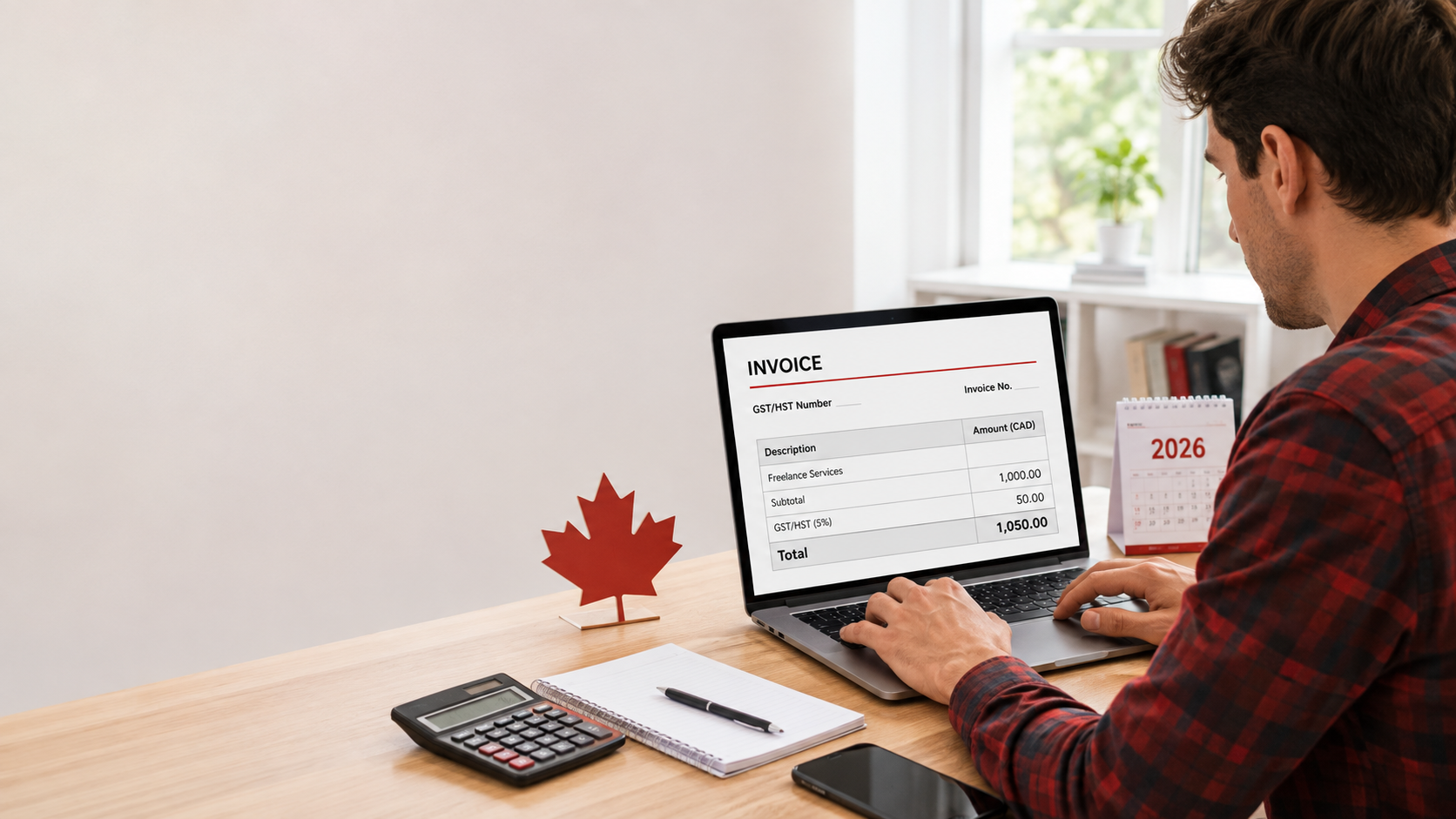
Canada GST/HST Invoice Requirements for Freelancers: The 2026 Compliance Guide
If you freelance in Canada and your billings have crossed $30,000 in the past year, the Canada Revenue Agency requires you to charge GST or HST on your invoices. Many freelancers hit this threshold without realising it applies on a rolling 12-month basis — not a calendar year — meaning you could be

10 Reasons Clients Don't Pay Invoices (And How to Fix Them)
Why Your Client Is Not Paying Your Invoice | 10 Real Reasons