VAT Inclusive vs. Exclusive: Which One Should Your Business Use?

If you run a business in South Africa, you’ve probably wondered whether to use VAT inclusive or VAT exclusive pricing. Should you show final price or list the main price and add VAT separately? It might seem like a thing but how you show VAT inclusive or VAT exclusive pricing affects how much customers trust you if you are following the rules and how much money you have.
A lot of people who own businesses look up things like VAT meaning or what is the difference between VAT inclusive and VAT exclusive to avoid making mistakes. Since South Africa has a VAT rate of 15 percent it is really important to get it right.
In this guide we will explain what VAT inclusive and VAT exclusive pricing mean in terms and help you pick the best option, for your business that uses VAT inclusive or VAT exclusive pricing.
What Is VAT Inclusive Pricing?
The price you display already includes VAT when you utilize VAT inclusive pricing. To put it simply, the client sees the total amount they must pay. No additional tax is charged afterward, and no further computations are made at checkout. They pay for what they see.
Supermarkets, restaurants, retail establishments, and the majority of B2C firms in South Africa all use this pricing strategy. Because it seems honest and transparent, customers prefer it. When they get to the payment step, they don't want any surprises.
Many small business owners mistake VAT inclusive pricing for VAT exclusive pricing, therefore it's critical to understand the difference. Let's take a clear look at it.
Create VAT-Compliant Invoices in Minutes
Stop worrying about VAT calculations and pricing mistakes. Whether you use VAT inclusive or VAT exclusive pricing, create professional, legally compliant invoices in South Africa with automatic 15% VAT calculations.
A clarification of VAT Inclusive Meaning
The definition of VAT inclusive is simple: the price listed already includes VAT. If a product is priced at R115 and includes VAT, the 15% VAT is already included in that amount. Tax is not added by the company to that sum. Rather, the VAT amount is covered up within the overall cost.
From the point of view of the client, this is easy. When tracking sales and creating your VAT returns, you still need to keep the VAT section separate from the rest of your business. Therefore, even when the client makes a single payment, you still need to figure out: What is the actual revenue? What is the amount of VAT that SARS collects
Example of VAT Inclusive Price (15% South Africa)
Let's use the 15% VAT rate in South Africa as a real-world example.
Assume you charge R1,150, VAT included, for a service. This indicates:
The customer paid R1,150 in total. 15% is the VAT rate.
The next inquire is: what percentage of that R1,150 is VAT?
To figure it out: The amount of VAT is R1,150 × (15 ÷ 115).
R150 is the VAT amount.
R1,000 is the actual revenue.
Thus: Your income is R1,000.
You have to pay SARS R150 in VAT.
It shows why companies look up "how to calculate VAT inclusive price" or "VAT inclusive formula." To prevent mistakes with your tax reports, you must carefully extract the VAT.
VAT Inclusive Formula (How to Extract VAT from Total Price)
Use the following equation to find the VAT portion if your price already contains it:
Total Price × (VAT Rate ÷ (100 + VAT Rate)) = VAT Amount
The formula for South Africa (15% VAT) is as follows:
Total Price × (15 ÷ 115) = VAT
Use the following to determine the base price (VAT excluded):
Base Price = Total Price ÷ 1.15
It is simple to differentiate VAT from a price that includes VAT using these calculations.
VAT-inclusive pricing is preferred by many small companies since it facilitates the purchasing process, particularly when selling directly to customers. For B2B transactions, though, where businesses frequently prefer to see VAT displayed separately, it might not always be the best option.
We'll define VAT exclusive and provide specific examples of how VAT exclusive pricing operates in the next section.
What Is VAT Exclusive Pricing?
The price you display does not include VAT when you use VAT exclusive pricing. The base price is shown first, then VAT is added to the invoice individually after that. The buyer may see the precise cost of the goods or service before taxes and the additional VAT you charge.
This approach is often used in business-to-business transactions. Because VAT-exclusive pricing makes the tax breakdown obvious, businesses favor it. It assists with paperwork, VAT claims, and financial transparency.
VAT inclusive displays the total price up front, whereas VAT exclusive adds VAT separately at the end. This is the primary distinction between the two types of pricing.
What Does VAT Exclusive Mean?
VAT exclusive means that the price listed does not include VAT. You need to add VAT to the base price to get the amount you have to pay.
For instance if a website shows a consulting fee of R1,000 VAT exclusive that R1,000 is the base amount. When you make the invoice you will add 15% VAT to it.
Many people search for "VAT meaning" or "VAT included vs VAT excluded" because they want to know why the total on their invoice is higher, than the price they saw.
From a business point of view using VAT pricing makes reporting easier because:
The base revenue is clearly shown.The VAT amount is separate.The invoice is transparent.
If you sell directly to customers VAT exclusive pricing can be confusing unless you clearly say that VAT will be added.
Example of VAT Exclusive Price (15% South Africa)
We will look at an example using the 15 percent VAT rate of South Africa.
Let us say you are offering a marketing service for the price of R2,000 and this price does not include VAT.
Here is how you calculate the amount that has to be paid:
Base price = R2,000
VAT (15%) = R2,000 × 0.15 = R300
Total payable = R2,300
So the invoice for the marketing service will show the following details:
Service Fee: The price of the service is R2,000
VAT at the rate of 15 percent: the VAT amount is R300
Total: the total amount that has to be paid is R2,300
This way of showing the VAT amount separately makes it very clear to the customer how much they are paying as VAT. Many businesses that are registered for VAT prefer this way of showing prices because they can claim the VAT amount of R300 as input VAT if they are eligible to do
This is one of the differences between VAT inclusive and VAT exclusive pricing when it comes to the VAT amount and how it is shown to the customer and this is especially important for VAT exclusive prices like the one, in this example.
VAT Exclusive Formula (How to Add VAT to Base Price)
If the price you have does not include VAT and you want to know the price with VAT you can use a simple formula.
VAT Amount = Base Price × VAT Rate
For people in South Africa it is even simpler:
VAT = Base Price × 15%
You can find the price by adding the VAT to the base price.
You can do it this way:
Total Price = Base Price + VAT
Using this formula makes it easy to calculate VAT and get the answer.
A lot of business owners look for ways to calculate the price without VAT because they do not want to charge their customers much or too little.
Now that you know what VAT inclusive and VAT exclusive mean you can compare them. Decide which one is better for your business.
The Exclusive Formula is a way to calculate VAT for your business. You can use the Exclusive Formula to make sure you are charging your customers the amount. The Formula is helpful, for business owners who want to calculate VAT.
VAT Inclusive vs VAT Exclusive – Key Differences
When we compare VAT inclusive versus exclusive the big difference is how we show the prices. VAT inclusive pricing shows the amount right away. On the hand VAT exclusive pricing adds the tax separately on the bill.
VAT inclusive works great for people buying things while VAT exclusive is better, for businesses that need to know the VAT amount.
Which Is Better for B2C Businesses and B2B Business?
For businesses that sell to people like you and me it is better to include the VAT in the price. When we go shopping we want to know that the price we see is the price we pay. If VAT is added later it can be. We might not trust the business. In South Africa most shops and restaurants include the VAT in the price so that we know how much we are paying.
For businesses that sell to businesses it is better not to include the VAT, in the price. This is because businesses need to know how much VAT they are paying so that they can claim it back. When businesses show the price the VAT amount and the total price separately it helps them with their accounting and keeps their financial records correct and easy to understand. Businesses like to have a breakdown of the VAT so that they can do their accounting correctly and keep track of their money.
What Does South African Law Say About VAT Pricing?
In South Africa the Section 65 of the VAT Act says that businesses should show prices that include Value Added Tax when they advertise to people. This helps keep consumers from being misled about prices. If you sell things directly to consumers or you list prices that everyone can see you have to include Value Added Tax in those prices. It is okay to show prices without Value Added Tax when you are dealing with businesses and you make it very clear that is what you are doing.
Pros and Cons of VAT Inclusive Pricing
VAT inclusive pricing is good because it shows the price right away so customers know exactly how much they will pay. This makes customers trust the company more. It is often used in retail. However the company needs to make sure it calculates VAT inside the company.
Pros and Cons of VAT Exclusive Pricing
VAT exclusive pricing on the hand shows the tax amount separately. This is useful for business to business transactions.. Sometimes it can be confusing, for regular customers when VAT is added later.
How to Show VAT Correctly on an Invoice?
If you are registered for VAT your invoice needs to have all the tax information, on it so you do not get into trouble in South Africa. Your invoice should have your company name, your VAT registration number, an invoice number, the date the customers details, what goods or services you are selling the VAT rate which's 15 percent the amount of VAT and the total amount the customer has to pay.
For example let us say your service fee is R10,000 and this does not include VAT. Then your invoice should say: Service Fee is R10,000 VAT is 15 percent which's R1,500 and the Total is R11,500. When your invoice is easy to read and understand it helps your customers see everything clearly. They can claim back the VAT they paid without any problems. VAT is very important. You need to show VAT correctly on your invoice.
Make Professional VAT Invoices Fast
Do not waste time doing VAT calculations by hand. With InvoiceDesire you can make VAT inclusive or VAT exclusive invoices in just a few minutes. It will automatically add 15% VAT show tax details and make professional invoices that follow the rules ready for you to download and send. Make your billing process simple. Spend more time growing your business.
Found this helpful?
Share it with a fellow freelancer or business owner.
Keep reading
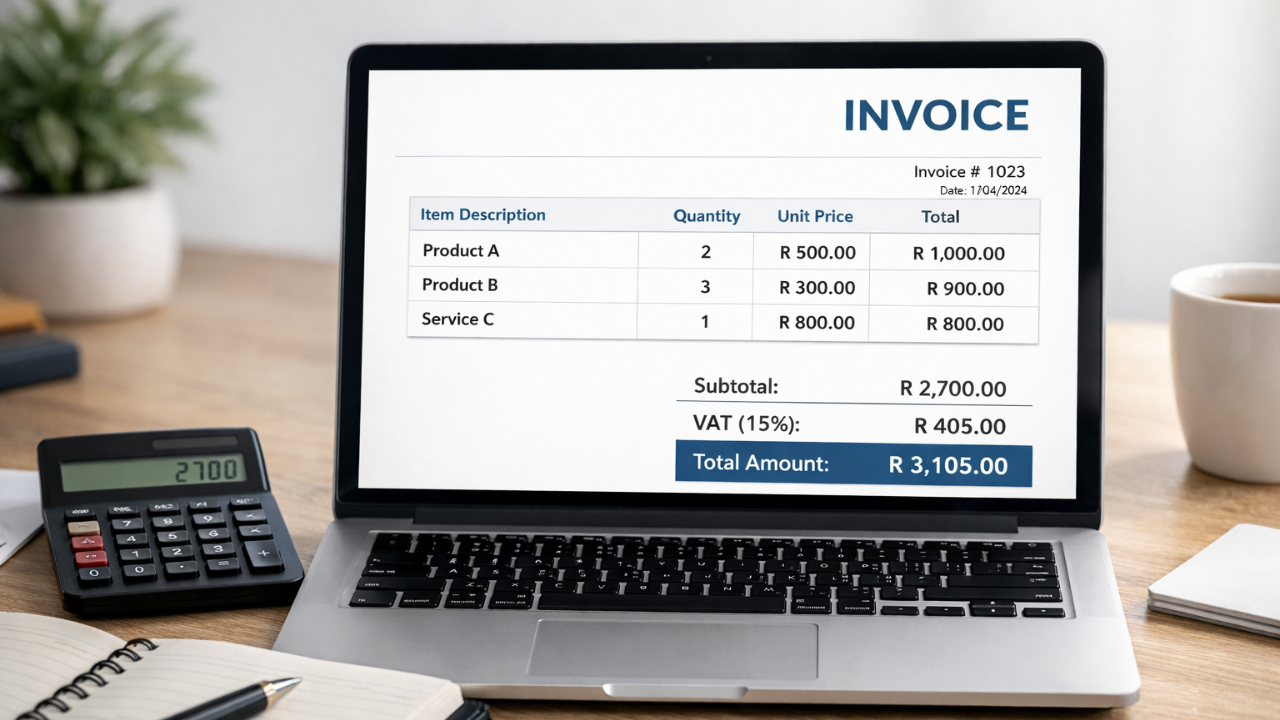
How to Calculate VAT in South Africa (15% Explained with Simple Examples)
Learn how to calculate VAT in South Africa at 15% with simple formulas and examples. Understand VAT calculations for invoices and improve your billing accuracy.
Invoice Numbering Rules in South Africa a Simple Guide for Businesses
Understanding invoice numbering rules in South Africa helps businesses maintain proper financial records and stay organized.
GST Invoice Requirements for Indian Freelancers in 2026: The Complete Checklist
If your annual freelance income in India exceeds ₹20 lakh, GST registration is mandatory. But even below that threshold, corporate clients often demand a GSTIN before processing your invoice. Understanding what a compliant GST invoice must contain helps you avoid rejected payments and stay on the ri
Can ChatGPT Create Invoices? Pros, Risks & Accuracy Explained
Can ChatGPT create invoices? Learn the benefits, risks, accuracy, and limitations of using AI for invoicing.
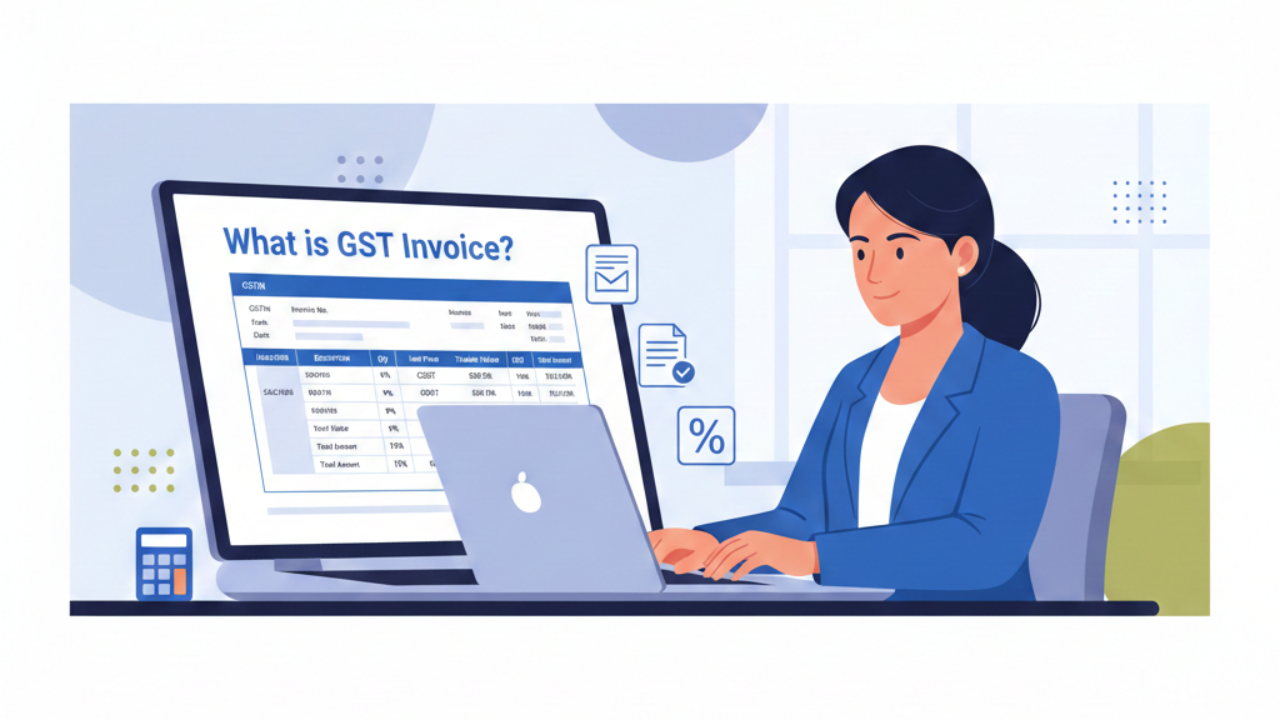
What is GST Invoice? Rules, Format & Mandatory Fields Explained
A GST invoice is a legally required document issued by registered businesses for taxable sales under GST. In this guide, we explain what is GST invoice, its rules, format, and mandatory fields to help your business stay compliant and avoid penalties.

How to Invoice Clients Without Revealing Your Home Address (Freelancer Privacy Guide 2026)
Most freelancers work from home, and most invoicing guides tell you to put your address on every invoice. But handing your home address to every client — especially those you have only just started working with — is a privacy risk that many freelancers overlook. In most jurisdictions, you have pract